Insulated Water Bottles: What Keeps Drinks Cold Longer, and the Bottle We'd Buy
Vacuum walls, the lid, and sheer volume decide how long ice lasts, not the hour claims. The physics in plain terms, the 64 oz bottle we'd buy, and how Hydro Flask, Stanley and Yeti compare.

Our picks
Prices checked September 4, 2026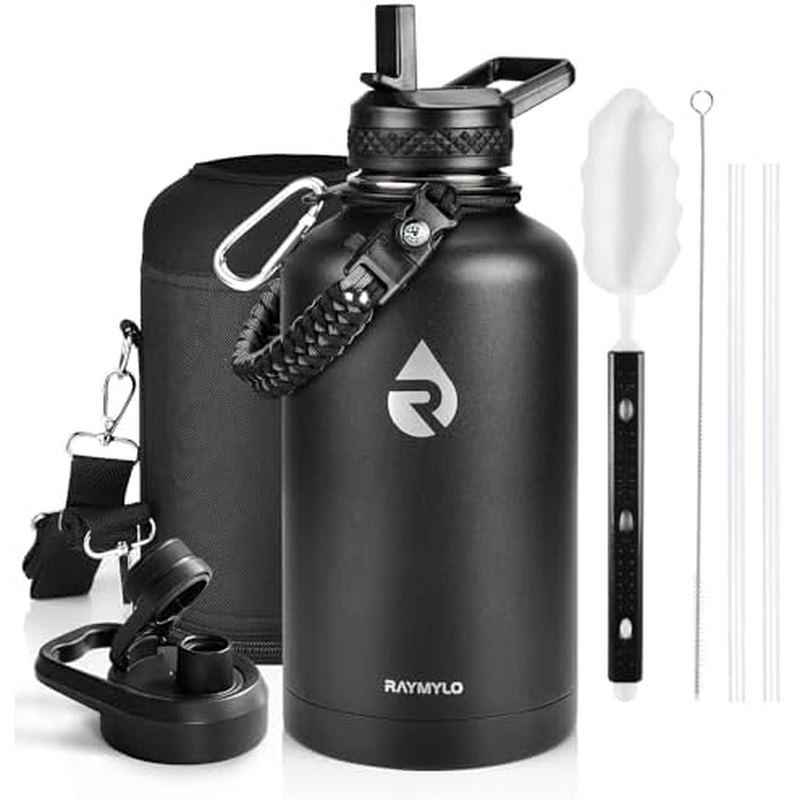
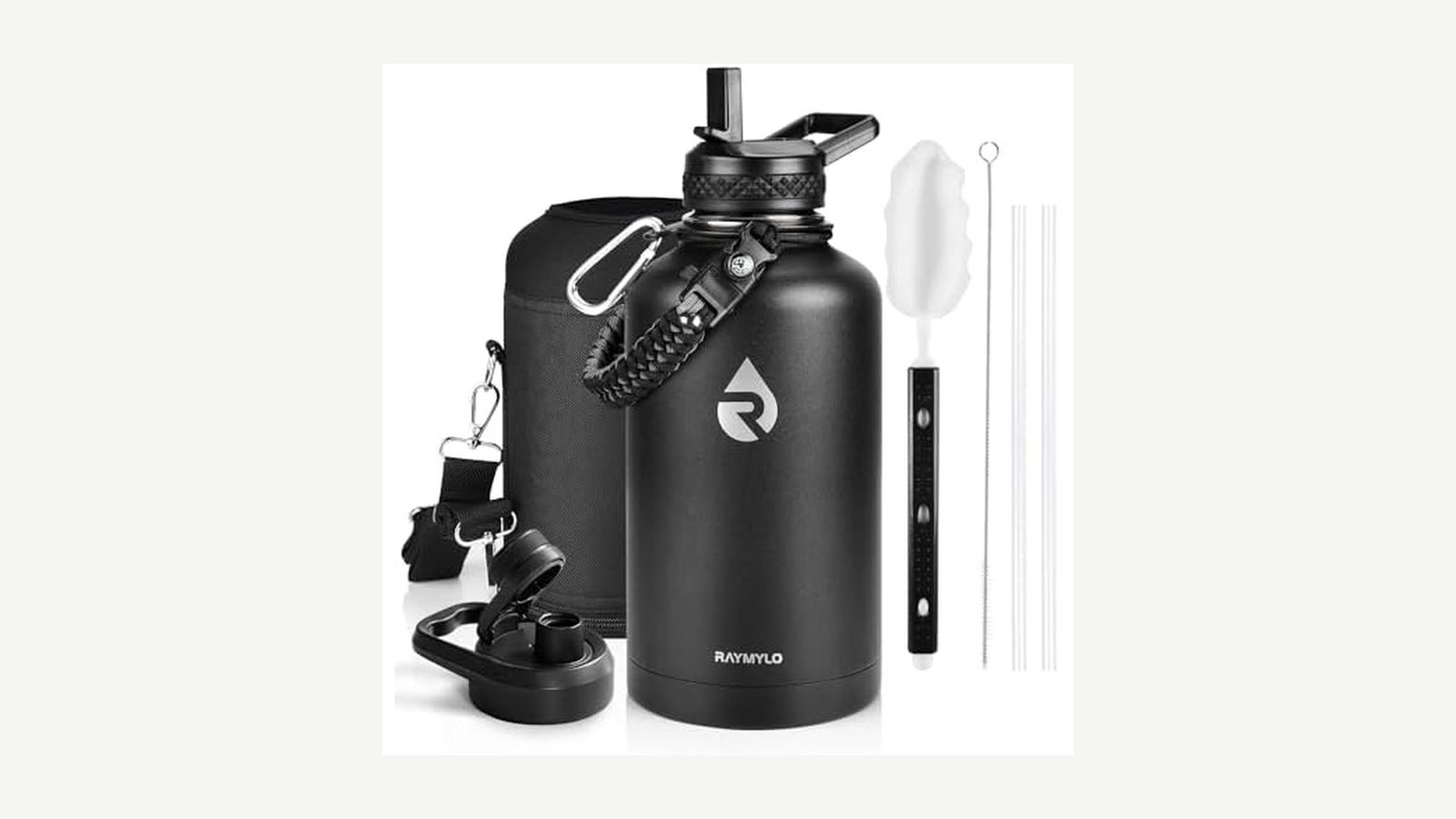
RAYMYLO 64 oz Triple-Wall Insulated Bottle
Half a gallon of triple-wall vacuum steel for under $40; the sheer volume means ice at dinner from a 7 a.m. fill. Too big for a cup holder, right for a desk, a truck or a long hike. 4.6 stars across 18,000+ reviews.
64 oz (half gallon)Triple-wall vacuumStainless steel4.6 stars, 18,000+ reviews
Every insulated bottle promises “24 hours cold,” and the claim is measured with a full load of ice, a closed lid and a 70-degree room. In a hot car or on a trail the real number is shorter, and the bottle that holds ice longest is rarely the one with the biggest claim. Three things decide it: a vacuum between steel walls (the only construction that truly works), how much heat comes in through the lid, and how much liquid is in there. Bigger bottles stay cold longer, full stop.
That last point is why our one affiliate pick is a half-gallon bottle. The RAYMYLO 64 oz is an oversized triple-wall vacuum bottle that costs $33–$37 and holds a 4.6-star average across more than 18,000 reviews. For a desk, a car, a job site or a long hot hike it will still have ice at the end of the day. It’s also too big for most bag pockets and too heavy for a short run, which is why we also name the Hydro Flask, Stanley and Yeti that most people end up comparing it to. Those three don’t pay us anything.
We didn’t run a thermometer test. This is a comparison of construction and published specs across about a dozen bottles, plus the side-by-side ice tests owners post in reviews, which are more consistent than you’d expect.
Four bottles most people are choosing between
| Bottle | Capacity | Insulation | Lid | Sealed for a bag | Price | Best for |
|---|---|---|---|---|---|---|
| RAYMYLO 64 oz | 64 oz (half gallon) | Triple-wall vacuum, stainless | Varies by variant; check the listing | Yes, with a screw lid | $33–$37 | All-day cold at a desk, in a car, on a long hike |
| Hydro Flask 32 oz Wide Mouth (not an affiliate link) | 32 oz | Double-wall vacuum | Flex Cap (screw) | Yes | about $45–$50 | The all-around daily bottle |
| Stanley Quencher H2.0 40 oz (not an affiliate link) | 40 oz | Double-wall vacuum | Straw and flip lid | No — it spills | about $45 | Desk and cup holder; ice all day |
| Yeti Rambler 26 oz Chug (not an affiliate link) | 26 oz | Double-wall vacuum | Chug cap | Yes | about $35–$40 | Gym, hiking, dishwasher-safe |
Why vacuum walls win, and what a third wall adds
Heat moves by conduction, convection and radiation. Pumping the air out from between two steel walls stops the first two almost completely, which is why a plain vacuum bottle outperforms foam-insulated plastic or a neoprene sleeve by hours, not minutes. Some bottles add a copper coating or a reflective layer inside the gap to cut radiation; it helps at the margins.
“Triple-wall,” as on the RAYMYLO, means an extra steel layer, usually with the vacuum on one side and a thin air or reflective gap on the other. In principle it slows radiant heat a little more; in owner comparisons the difference against a good double-wall bottle is small. What the third wall does reliably is add weight and rigidity, and rigidity matters, because the way a vacuum bottle dies is a dent. Drop a thin-walled bottle on its base, crease the steel, and the seal between the walls can fail. You’ll know because the outside starts sweating and getting cold. Once that happens it’s a single-wall bottle forever.
The lid is where the cold escapes
A vacuum wall leaks almost nothing; a lid leaks constantly. A thin plastic cap on a wide mouth is a large, uninsulated surface sitting right on top of the ice. The bottles that win the ice tests owners post have insulated lids — a double-wall steel cap or a thick plastic one with an air gap — and screw threads rather than flip-tops.
Lid style is also the comfort decision. A screw cap seals best and cleans easiest. A straw lid is the most convenient at a desk and the worst for insulation and cleanliness: an open channel to the ice and a gasket that grows things. This is the Stanley Quencher’s whole trade-off — it’s the most-loved desk cup in America and it will pour itself into your backpack if you tip it. A chug cap (Yeti) or a flex cap (Hydro Flask) is the middle ground. Whatever you choose, make sure the gasket pulls out; a lid you can’t fully clean is a lid you’ll stop using.
Volume: the 64-ounce argument
Cold retention scales with volume because a bigger body of water has more thermal mass relative to its surface area. Owner comparisons of 32-ounce and 64-ounce bottles from the same brand reliably show the big one holding ice hours longer, sometimes into the next morning. This is the honest reason to buy the RAYMYLO 64 oz over a smaller premium bottle: at half a gallon it simply has more cold to lose. Filled with ice at 7 a.m., you’ll be pouring cold water at 5 p.m. in most conditions.
The cost is size. Sixty-four ounces of water weighs a little over four pounds before the bottle, it won’t fit a cup holder or most side pockets, and it’s a two-hand pour when full. It suits a desk, a truck, a job site, a soccer sideline, or a day hike where it lives in the main compartment. It does not suit a run or a bag with a bottle sleeve — for those, the 26-ounce Yeti or 32-ounce Hydro Flask is the right size, and we’d rather you buy those than a bottle you leave at home.
What we’d buy
For all-day cold in one fill: the RAYMYLO 64 oz triple-wall ($33–$37). Half-gallon stainless steel, triple-wall vacuum, and the volume to still have ice at dinner. More than 18,000 reviews at 4.6 stars is an unusual amount of agreement for a bottle at this price, and the low ratings are mostly about the weight and about lid gaskets rather than lost vacuum. Lid options vary by the variant you pick — check the listing for whether yours includes a straw or a spout lid. It’s the bottle we’d buy for a desk or a car.
The all-rounder, at a price: Hydro Flask 32 oz Wide Mouth, about $45–$50, not an affiliate link. Lighter than the RAYMYLO, fits a bottle pocket, a screw-on Flex Cap that seals, and a powder-coat finish that grips. If you carry your bottle more than you set it down, this is the size and shape.
For the desk and the cup holder: Stanley Quencher H2.0 40 oz, about $45, not an affiliate link. Excellent vacuum body, a handle, and a straw lid that means it’s a cup, not a bottle. Keep it upright and it’s ice all day; put it in a bag and it isn’t.
For the gym, the trail and the dishwasher: Yeti Rambler 26 oz Chug, about $35–$40, not an affiliate link. Yeti’s bodies are thick, the chug cap is fast and sealed, and the whole thing is dishwasher-safe, which a lot of coated bottles aren’t.
Habits that beat the spec sheet
Pre-chill: swirl cold water in the bottle for a minute before adding ice, so the steel isn’t stealing the first round of cold. Fill with ice to the top, then add water — more ice is more runtime. Keep it out of direct sun; a dark bottle on a dashboard heats through the lid regardless of the walls. And don’t drop it on its base. Follow those four and a $33 bottle beats a $50 one used carelessly.
If you’re carrying one on a hike, our daypack guide covers what fits where.
FAQ
Is triple-wall really better than double-wall?
A little, in theory; in owner comparisons the gap against a well-made double-wall bottle is small. Buy triple-wall for the rigidity and dent resistance, not for a dramatic difference in hours.
Why does my bottle sweat on the outside now?
The vacuum has been lost, almost always from a dent near the base. It’s not repairable. Most brands replace a bottle that fails this way under warranty if it wasn’t dropped; keep the receipt.
Wide mouth or narrow?
Wide for ice, cleaning and a bottle brush; narrow for drinking while walking. If you can only own one, a wide-mouth body with a chug or flex cap is the most versatile setup, which is exactly what the Hydro Flask and Yeti are.
The bottom line
For a desk, a car or a job site where the bottle sits and you want ice at 5 p.m., buy the RAYMYLO 64 oz. For a bottle you carry — gym, hiking, a bag pocket — get the 32 oz Hydro Flask Wide Mouth or the 26 oz Yeti Rambler Chug (neither an affiliate link). The Stanley Quencher is the right desk cup and the wrong thing to put in a backpack.
What we like
- Volume is the most reliable predictor of cold retention; a 64 oz bottle holds ice hours longer than a 32 oz from the same shelf
- Vacuum-wall stainless is the only construction that genuinely works; the differences between good bottles are mostly lid and size
- The RAYMYLO 64 oz gets you half-gallon, triple-wall cold for $33–$37 with 18,000+ reviews behind it
What to watch
- A half-gallon bottle weighs over four pounds full, won't fit a cup holder or most bottle pockets, and pours with two hands
- Straw lids (the Stanley Quencher included) leak heat and spill in a bag; screw caps insulate and seal better
- A dent at the base can kill the vacuum on any bottle, and it isn't repairable
Junjie Li
Junjie researches and writes every guide on this site. No lab and no sponsors: manufacturer specs, long-term owner reviews and professional test results, then a straight answer on what to buy for each situation.