Daypack Sizes Explained: What to Buy for Hiking, Travel, and Both
18–22 liters covers most day hikes, torso length matters more than height, and a hip belt starts paying off at about ten pounds. Plus the $20 packable we'd buy and two we'd buy elsewhere.

Our picks
Prices checked September 4, 2026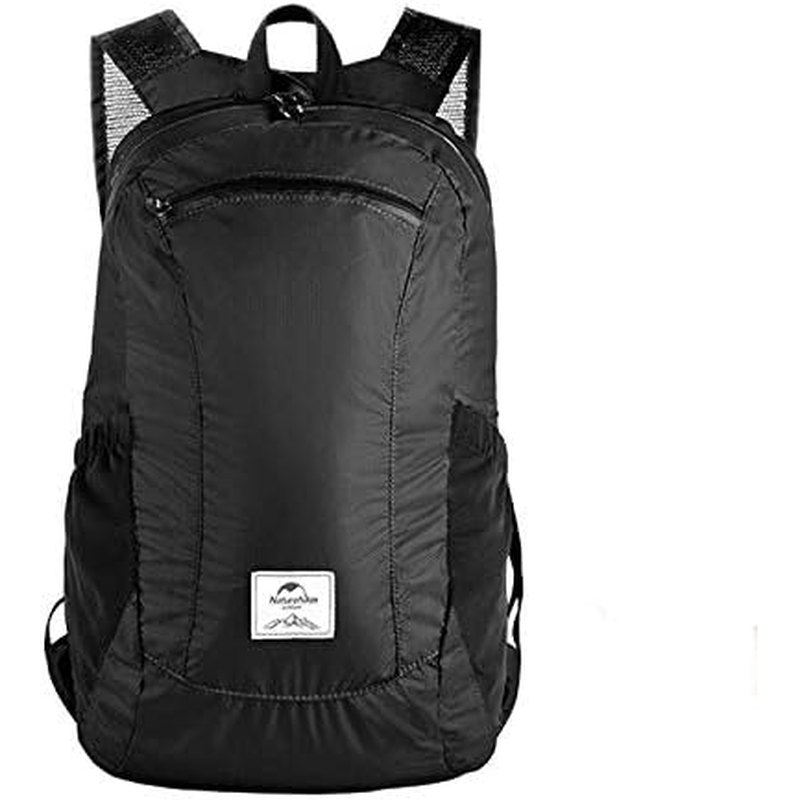
Naturehike 18L Packable Daypack
Stuffs into its own pouch, weighs a few ounces, and costs about $20: the right bag to ride in a suitcase and become the walking-around pack, or to go up a summit from camp. Not a first hiking pack. 4.3 stars across about 1,900 reviews.
18 LStuffs into its own pouchWater-resistant fabricAbout $20
A daypack is the piece of gear you’ll use two hundred days a year, and the decision comes down to two numbers most people get wrong. The first is liters: 18 to 22 covers a full day hike with two liters of water, lunch, a rain layer and a first-aid kit, and anything bigger mostly invites you to carry more. The second is torso length, not height, and it’s why a pack that felt fine in the store is riding on your stomach an hour up the trail.
Get those two right and the rest — back panel, hip belt, pockets — is refinement. We haven’t put these packs on a load rig. This is a spec comparison of about fifteen current daypacks from Osprey, REI, Deuter, Gregory, Naturehike and Cotopaxi, read against long-term owner reviews, which are very good at telling you which strap frays and which zipper splits first. One pack below pays us a commission through our link. The Osprey and REI packs don’t, and for a lot of readers they’re the right buy.
Four packs that cover most people
| Pack | Liters | Weight (approx.) | Back panel / hip belt | Price | Best for |
|---|---|---|---|---|---|
| Naturehike 18L packable | 18 | A few ounces | None / none | $20 | Travel days, summit pushes from camp, a spare in the suitcase |
| REI Co-op Flash 22 (not an affiliate link) | 22 | About 14 oz | Removable foam sheet / webbing | about $60 | Most day hikes |
| Osprey Daylite (not an affiliate link) | 13 | About 1 lb | Foam and mesh / webbing | about $70 | Everyday carry, short hikes, a light commute |
| Osprey Daylite Plus (not an affiliate link) | 20 | About 1.3 lb | Foam and mesh / webbing | about $75 | One pack for trail and travel |
Liters: pick the smaller one
The liter number is total volume including pockets, and packs are honest about it. What’s misleading is your own estimate of what you carry. Lay out a real day-hike kit — two liters of water, food, a rain shell, a warm layer, first aid, a headlamp, phone and keys — and it fills about 15 liters. An 18- to 22-liter pack holds that with room for a fleece in fall. The Flash 22 is the size we’d point most hikers to; the 13-liter Daylite is a genuine everyday pack that also does a summer morning on the trail.
Go to 25–30 liters only when you consistently carry heavy or bulky things: winter layers, a camera body and two lenses, or food and water for kids. That’s also the point where you want a padded hip belt, because above roughly ten pounds the load stops being comfortable on shoulder straps alone.
For travel, size to the worst day: laptop, chargers, a bottle, a jacket and what you bought. Twenty to 25 liters covers it and still fits the personal-item allowance under an airline seat (commonly around 18 × 14 × 8 inches). If you’re pairing it with a rolling bag, our carry-on guide covers the other half.
Fit: measure your torso, not your height
Torso length is the distance from the bony bump at the base of your neck (the C7 vertebra) to the point on your spine level with the top of your hip bones. Most adults land between 16 and 21 inches; two people the same height can differ by three. Brands publish which torso range each size fits. Single-size packs like the Daylite and Flash 22 are cut for an average torso, roughly 17 to 19 inches, and reviewers under about five-foot-four often note the back panel is long for them.
Two straps do most of the comfort work. A sternum strap pulls the shoulder straps inward so they stop sliding off and takes pressure off the front of your shoulders; we’d consider it non-negotiable, and it’s the first thing missing on very cheap packs. A hip belt on a daypack is usually thin webbing that stabilizes rather than carries — fine up to about ten pounds. Above that, you want padding on the belt, which is a 25-liter-plus pack conversation.
Back panels, fabric, and how it opens
Back panels come three ways. A plain foam panel is light and fine for small loads. A framesheet — a thin plastic or foam sheet — keeps a water bottle from poking your spine and carries a bit more; the Flash 22’s is removable and doubles as a sit pad. Suspended mesh “trampoline” backs move air and are wonderful in heat, but they push the load away from your body and add weight, which is why they show up on bigger packs.
Most daypacks are nylon or polyester with a water-repellent finish. Higher denier means thicker, heavier, more abrasion-resistant fabric; ripstop weaves stop small tears from spreading. Almost none are waterproof, including the ones with “waterproof” in the listing title — a rain cover or a dry-bag liner is what keeps a laptop dry.
Access matters more than it sounds. Top-loaders with a drawcord shed rain and are simple; panel-loaders unzip like a suitcase and are far better for travel and for finding things. The Flash 22 is a top-loader with a lid; the Daylite and Daylite Plus are panel-loaders, which is part of why they cross over to daily use so well.
The $20 pack, and what it’s for
The Naturehike 18L packable is a nylon daypack that stuffs into its own small pouch, weighs a few ounces, and costs about $20. It holds a 4.3-star average across about 1,900 reviews. We’d buy it, and we’d be clear about what it is: a second pack. It has no frame, no padding to speak of and no hip belt, so with more than about eight pounds in it the straps dig and the load sags. The one-star reviews are almost entirely about a strap seam or a zipper giving out under a heavy load, which is the pack being used as something it isn’t.
Used as intended it’s excellent. It rides folded in a suitcase and becomes the walking-around bag on a city trip. It goes up a summit from a base camp with a jacket, water and snacks while the big pack stays in the tent. It lives in a glovebox. At this price and weight it costs nothing to own, and the people who rate it highly are the ones using it that way.
The two we’d buy at full price, which pay us nothing
REI Co-op Flash 22, about $60, is the best-value real day-hike pack we know of. Twenty-two liters, around 14 ounces, a sternum strap and webbing hip belt, a removable foam back pad, side bottle pockets you can reach, and a top lid with a pocket. It’s the pack we’d hand someone who asked for “just a hiking daypack.” Not an affiliate link.
Osprey Daylite, about $70, is 13 liters of panel-loading everyday pack with Osprey’s warranty and a padded, ventilated back. It’s the one that goes to the office on Monday and up a short trail on Saturday. The Daylite Plus at about $75 adds seven liters and a laptop sleeve, and if you want one pack for hiking and travel and don’t mind paying more than the Naturehike, that’s the one. Neither pays us anything.
Mistakes we see in the returns
Buying 30 liters “just in case” and cinching it down for the rest of its life. Skipping the sternum strap. Bringing a padded commuter pack up a trail and finding out it holds sweat like a sponge. And buying the packable pack as the only pack — good as a second, not as a first.
FAQ
What size daypack for a day hike?
18 to 22 liters for most people and most seasons. Up to 30 if you carry winter layers, camera gear or supplies for others. If you’re always cinching the compression straps fully down, it’s too big.
Do I need a hip belt on a daypack?
Not under about ten pounds; a sternum strap does the work. Above that, a padded hip belt makes a real difference, and that’s a 25-liter-and-up pack.
Can a packable daypack be my only hiking pack?
For short, light hikes, yes. For a full day with two liters of water, the unpadded straps and lack of structure catch up with you. Buy it as the second pack it’s designed to be.
The bottom line
For most day hikers, buy the REI Co-op Flash 22 (not an affiliate link) and stop there. For one pack that commutes and hikes, the Osprey Daylite or Daylite Plus (also not affiliate links). Add the $20 Naturehike 18L packable as the second bag that lives in your suitcase and goes up summits from camp; that's the one we earn a commission on, and it's still the right buy for that job.
What we like
- 18–22 liters is enough for a real day hike; the REI Flash 22 sits exactly there for about $60
- A $20 packable like the Naturehike 18L is the right second pack for travel days and summit pushes
- Torso length, a sternum strap and a webbing hip belt do more for comfort than any pocket layout
What to watch
- A packable pack has no frame, padding or hip belt; past about eight pounds the straps dig and the seams take the strain
- Single-size packs are cut for roughly a 17–19 inch torso and ride long on shorter people
- 'Waterproof' in a pack listing means water-repellent fabric; a laptop still needs a liner or a cover
Junjie Li
Junjie researches and writes every guide on this site. No lab and no sponsors: manufacturer specs, long-term owner reviews and professional test results, then a straight answer on what to buy for each situation.