How to Buy Sunglasses That Fit Your Face and Actually Protect Your Eyes (Under $25 Picks Included)
UV400 is the only spec that matters for protection, polarization is about glare not safety, and fit comes down to three measurements printed inside the arm. Here's how to read them — plus four cheap polarized pairs we'd buy.

Our picks
Prices checked September 4, 2026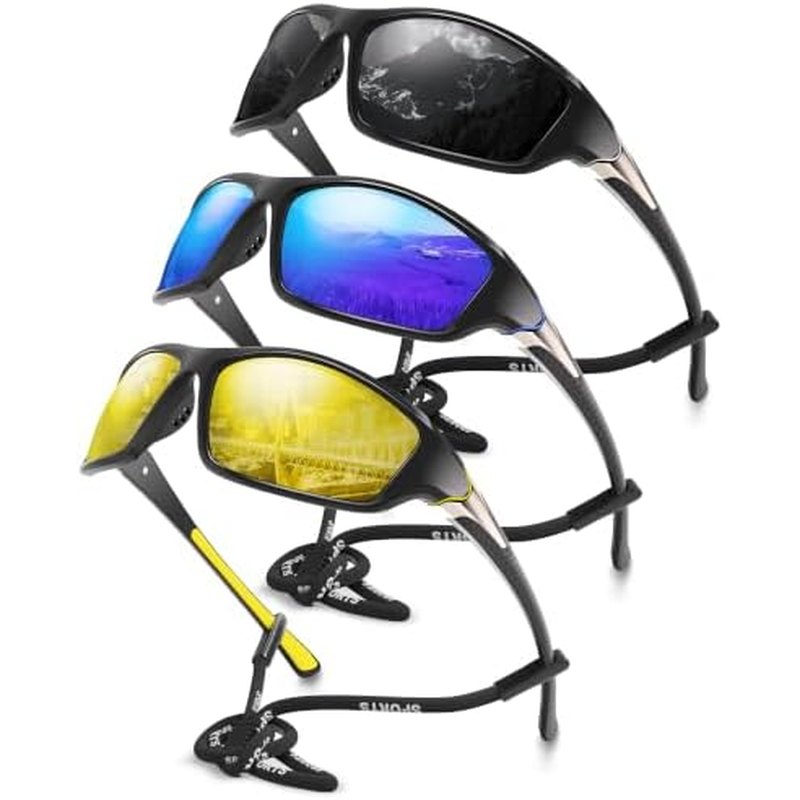
Foliful Polarized Wrap-Around Sport Sunglasses
Polarized UV400 lenses in a wrap frame that blocks light from the sides — the shape that works for driving, fishing and running. 4.5 stars across 5,000+ reviews and among the most-bought sunglasses on Amazon in a typical month. Cheap enough to keep a pair in the car.
UV400PolarizedWrap frameTR90 frame
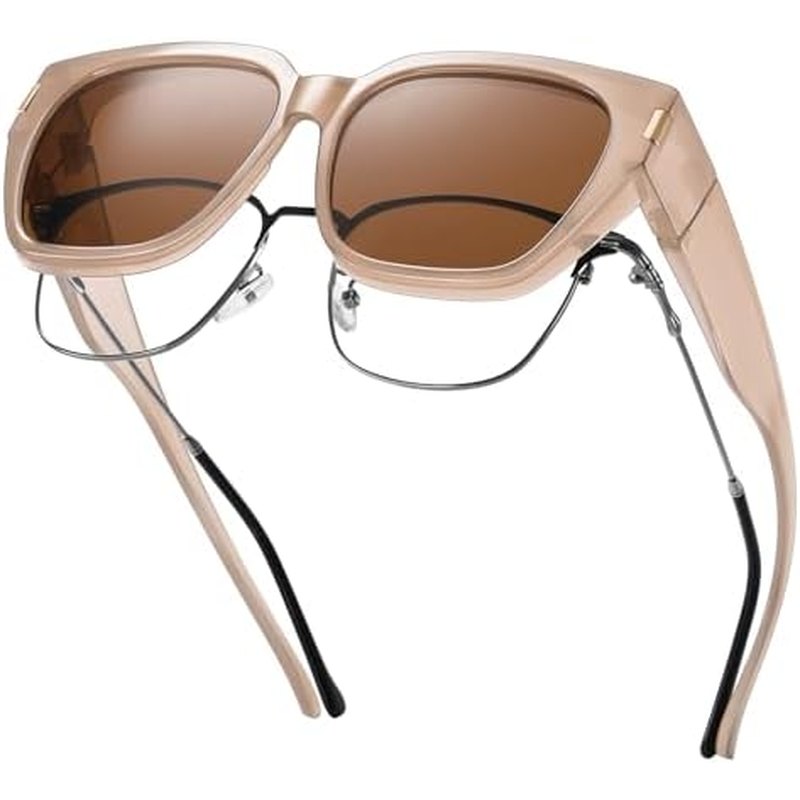
HAOLOTA Polarized Fit-Over Sunglasses
Designed to wear over your regular glasses, with side shields so light doesn't leak in around the edges. Polarized and UV400. If you wear prescription lenses and don't want to pay for prescription sunglasses, this is the practical answer.
Fits over glassesUV400 polarizedSide shieldsLightweight
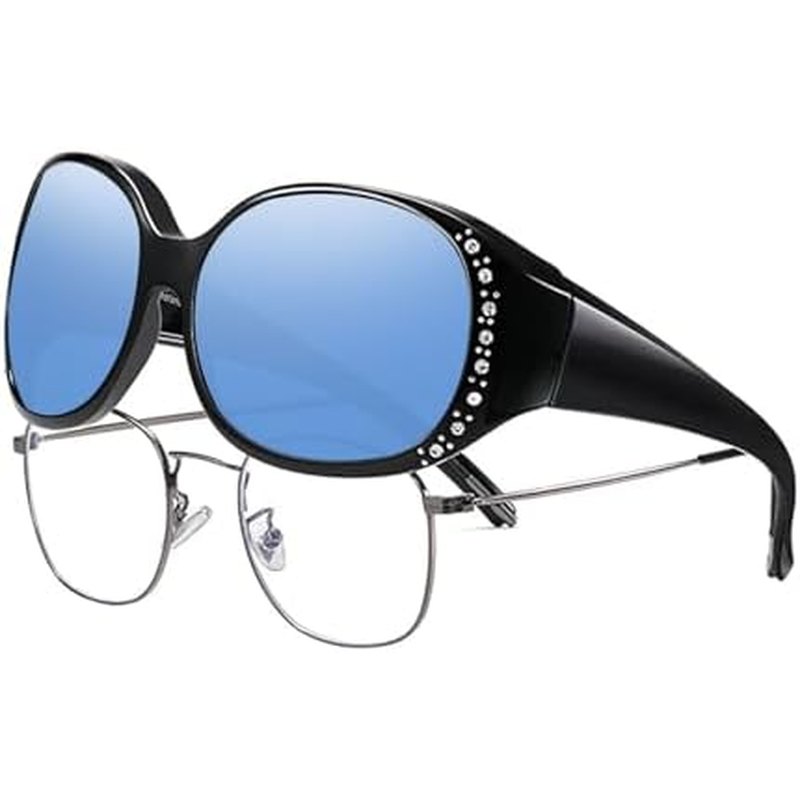
HAOLOTA Polarized Fit-Over (rhinestone temples)
Same fit-over function as above with a dressier frame, for people who find the plain version too utilitarian.
Fits over glassesUV400 polarizedDecorative temples
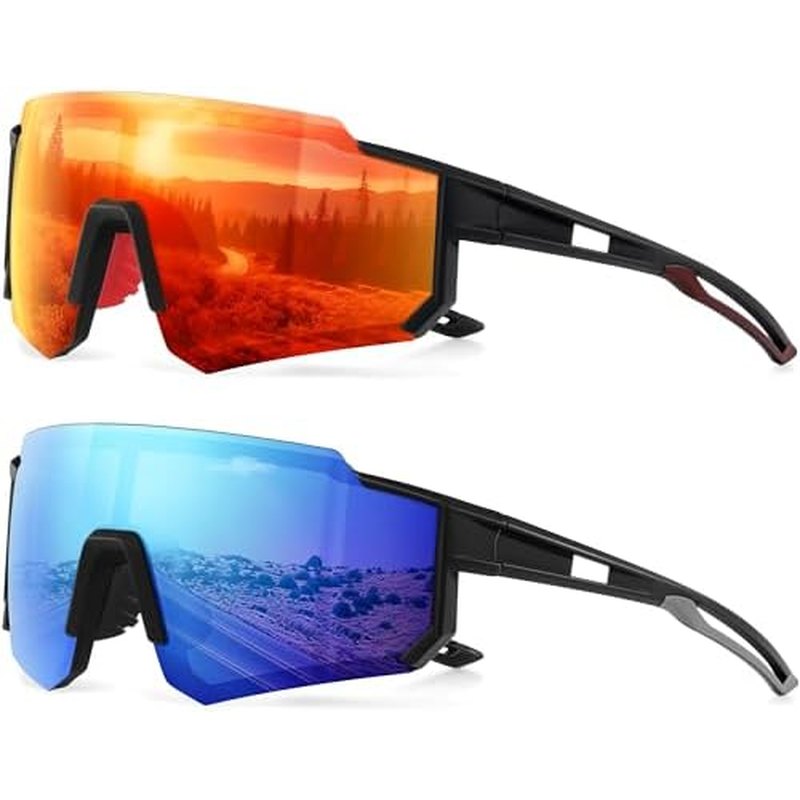
TURBOPEP Polarized Sports Sunglasses
A second wrap-style polarized option for cycling, fishing and running, with a lighter frame. Good as the spare pair that lives in a gym bag.
UV400PolarizedSport wrapUnisex
Sunglasses are sold on brand and shape, and bought on how they look in a mirror. Fair enough — but two things about them are not matters of taste, and both are printed in small type: whether the lenses block UV, and whether the frame is actually your size. Get those right and a $20 pair protects your eyes exactly as well as a designer pair. Get them wrong and the designer pair is a fashion accessory that lets UV in around the edges.
We read the FDA and American Academy of Ophthalmology guidance on lens protection, compared the specs and owner reviews of thirty current pairs from $15 to $200, and looked in particular at the complaints that repeat: hinges, lens scratching, and “these don’t fit my face”. Here’s what actually matters.
Protection: the one spec that isn’t optional
Look for UV400 or “blocks 100% of UVA and UVB” on the label or lens sticker. UV400 means the lens blocks wavelengths up to 400 nanometers, which covers all UVA and UVB. That’s the whole requirement. It’s a coating applied at manufacture; it costs pennies and it’s on almost every pair sold in the US, including the $20 ones. It does not get better with price.
Two things that do not indicate protection:
- Lens darkness. A dark lens without UV coating is worse than no sunglasses: your pupils open wider behind it and let in more UV.
- Polarization. Polarized lenses reduce glare; they don’t inherently block UV. Most polarized lenses are also UV400, but check for both words.
Lens color affects how you see, not how protected you are. Grey keeps colors true (best for driving); brown/amber increases contrast (good for fishing, cloudy days); green is a compromise. Mirror coatings reduce brightness further and scratch more easily.
Polarization: worth it for driving and water
Polarized lenses filter horizontally reflected light — the glare that bounces off a wet road, a car bonnet, a lake or snow. For driving, fishing, boating and beach days the difference is large and immediate; colors deepen and squinting stops. For general walking-around use it’s nice but not essential.
The downside: some LCD screens — car dashboards, phone screens at certain angles, pump displays — look dark or show a rainbow pattern through polarized lenses. Pilots avoid polarization for this reason. If you spend your day reading screens outdoors, consider a non-polarized UV400 pair.
Fit: three numbers inside the arm
Almost every pair has three numbers printed on the inside of a temple arm, in the form 52□18 140:
| Number | What it is | Typical range | How to use it |
|---|---|---|---|
| 52 | Lens width (mm) | 48–58 | Narrow faces: under 52; average: 52–55; wide: 56+ |
| 18 | Bridge width (mm), the gap over your nose | 14–22 | Narrow bridge / low nose: 14–17; average 18–19; wide: 20+ |
| 140 | Temple length (mm), the arm | 135–150 | Shorter for smaller heads; if arms press behind the ears, go longer |
If you own glasses that fit well, read their numbers and shop within a few millimetres of them. That’s the single most reliable way to buy sunglasses online.
Face-shape rules (“round faces need angular frames”) are fine as a starting point but matter far less than the numbers. A frame that’s the wrong bridge width slides down your nose whatever its shape.
Our picks, and why they’re cheap
Because UV400 is a commodity, we picked on fit purpose, polarization and owner-reported durability rather than brand.
Foliful polarized wrap-arounds — the driving and sport pair. Wrap frames curve around the temples and block light from the sides, which is where cheap flat frames leak. Polarized, UV400, a flexible TR90 frame that survives being sat on, and about 5,000 reviews at 4.5 stars. At $21 to $26 you can keep a pair in the car and a pair in the bag.
HAOLOTA fit-overs — for glasses wearers. Fit-over sunglasses go on top of your prescription glasses, with side shields so nothing leaks in. They look utilitarian (the rhinestone version is the attempt to fix that), and they solve a real problem for under $20 that prescription sunglasses solve for $200-plus. Polarized and UV400.
TURBOPEP sport pair — the spare. A second wrap-style polarized pair at a similar price, lighter frame. Owners buy these for cycling and running.
For style-led picks (not affiliate links): Ray-Ban’s Wayfarer and Aviator are the durable classics at $150–$200, and Goodr’s polarized runners at about $25 are the sporty pair with a personality. Neither protects your eyes better than the pairs above.
Durability: what $20 buys and what it doesn’t
Cheap sunglasses fail at the hinges and the lens coating. Expect a $20 pair to last one to two seasons of daily wear. Spring hinges (the arm gives when pushed outward) last longer than plain ones. A hard case matters more than the frame material — most lens scratches happen in bags, not on faces.
FAQ
Are expensive sunglasses safer for my eyes?
No. UV400 protection is identical across prices. Expensive pairs buy better frames, hinges, lens optics and style.
Do I need sunglasses on cloudy days?
UV passes through cloud; if you’re outdoors for long periods, yes. The eye-health risk (cataracts, macular damage) accumulates over years of exposure.
Should kids wear sunglasses?
Yes — children’s lenses transmit more UV than adults’. Any UV400 pair that fits and that they’ll keep on is right.
Polarized or not for driving?
Polarized, unless your car’s display or your phone mount becomes unreadable. Try them on a short drive first.
The bottom line
For driving, water and sport, the Foliful wrap-arounds at about $22 do everything a $150 pair does for protection and glare, and you won't cry when you sit on them. If you wear prescription glasses, the HAOLOTA fit-overs solve the problem for under $20. Spend more only for style or for frame durability — never for 'better UV protection', which doesn't exist above UV400.
What we like
- UV400 protection is the same on a $20 pair as on a $300 pair — it's a coating, not a luxury
- Polarization removes glare from roads, water and hoods; for driving and anything near water it's the upgrade that matters
- Three numbers inside the arm (lens width, bridge, temple length) let you buy a fit online that actually works
What to watch
- Polarized lenses can make some phone and dashboard screens look dark or patterned
- Cheap frames use cheap hinges; expect a $20 pair to last a season or two of daily use, not a decade
- Dark lenses are not the same as protective lenses — always check for UV400 or '100% UVA/UVB'
Junjie Li
Junjie researches and writes every guide on this site. No lab and no sponsors: manufacturer specs, long-term owner reviews and professional test results, then a straight answer on what to buy for each situation.