How to Build a Capsule Wardrobe You'll Actually Wear (and the Four Pieces We'd Buy First)
Skip the 33-item lists. Log two weeks, count your ratio of soft to polished days, pick two neutrals in one undertone, and start with four hard-working basics. The method, with the pieces we'd buy.

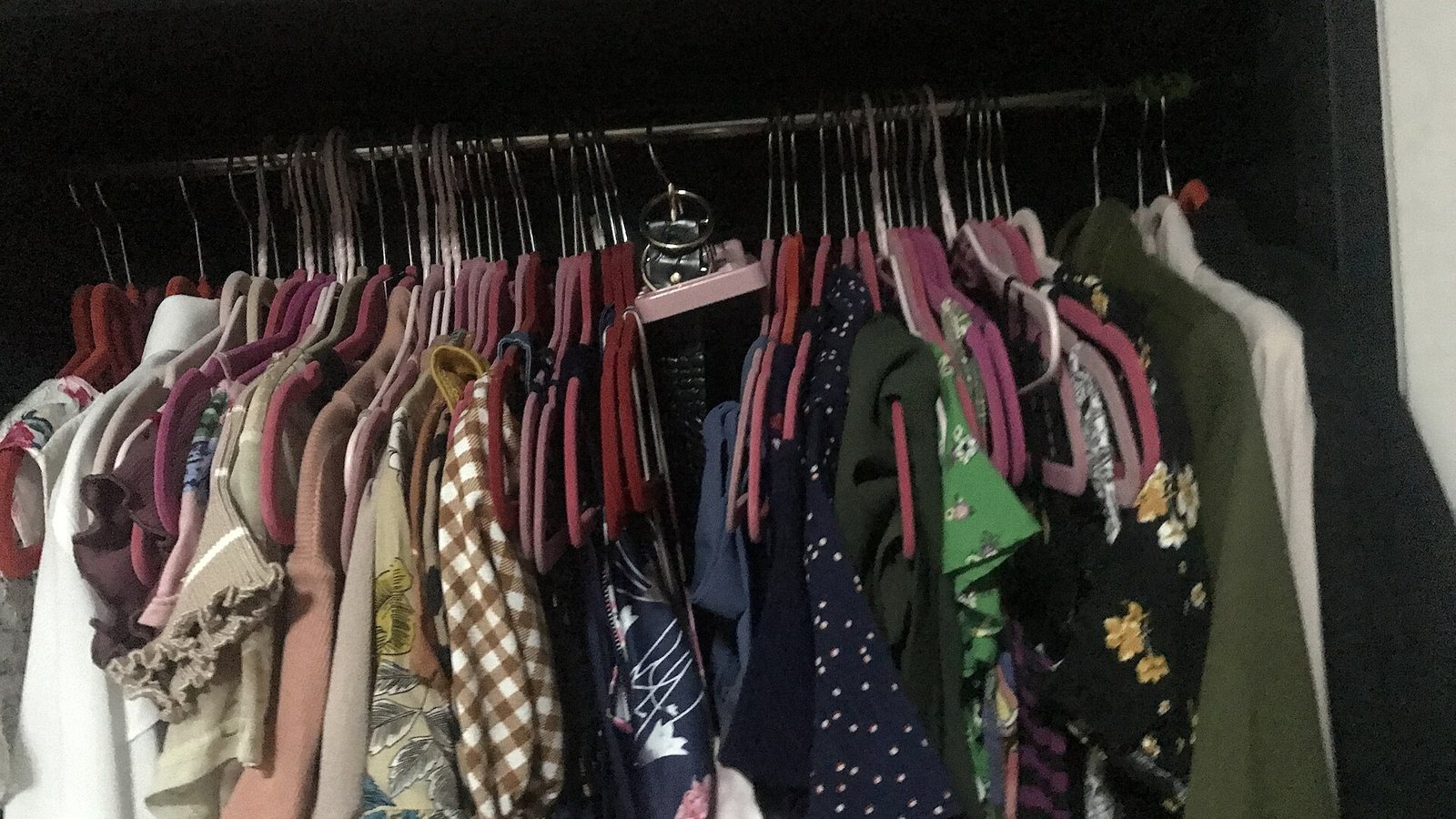
Every capsule-wardrobe guide hands you a number — 33 items, 37 items, ten pieces for ten days — and every one of those numbers came out of somebody else’s calendar. If your week includes a commute, a gym bag, a kid’s soccer game and a climate that swings forty degrees between January and July, a capsule built from a stranger’s list is abandoned by week three. That is the failure pattern in nearly every “I tried a capsule wardrobe” post we read: the idea was fine, the count came before the life.
The method that holds up runs the other way. Log what you actually wear for two weeks, turn it into a ratio of relaxed to polished days, choose two neutrals in a single undertone, then buy the few pieces that carry the most wears. The item count falls out at the end instead of going in at the start. Below is that method, followed by the four pieces we would buy first from an empty rail. None of them pays us anything; they are simply the honest answer.
We didn’t run a wear test or hire a stylist. This is built on years of owning these pieces, on the patterns in long-term owner reviews (what people say about a $15 tee after thirty washes matters more than what they say after one), and on cost-per-wear arithmetic anyone can redo at home.
The four pieces we’d buy first
| Piece | Job in the capsule | What we’d buy | About | Worth knowing |
|---|---|---|---|---|
| Plain crew-neck tee, three of them | The layer under everything; the most-worn item in any capsule | Uniqlo Supima cotton tee (not an affiliate link) | $15–$20 each | Buy three in one neutral. The heavier Supima cotton keeps its shape past thirty washes where thin tees bag at the neck |
| One pair of straight jeans | Sits in the middle of the formality scale, so it works with sneakers, boots and loafers | Levi’s 501 (not an affiliate link) | $70–$100 | Mid-rise, straight leg. The rigid version breaks in over a month and then lasts years; the stretch version is comfortable on day one and sags sooner |
| One fine-gauge knit | Warmth without bulk; under a jacket or on its own | Everlane cashmere crew (not an affiliate link) | around $150, often less on sale | Hand-wash or a delicates bag on cold. Expect a little pilling in the first month, then it settles |
| One shoulder-season coat | The most-worn outerwear in most US cities, where “cold” is 45°F and raining | A classic single-breasted trench (not an affiliate link) | $100–$250 | Knee-length, in a neutral from your palette. Uniqlo’s is about $100; London Fog and Everlane run higher |
Start with these four and the rest of the wardrobe has something to anchor to. Start with a statement jacket and you have a jacket.
Count the week before you count the clothes
Take two ordinary weeks and write down what you wore each day, grouped roughly: soft (leggings, sweats, the tee you slept in), everyday (jeans and a knit, a casual dress), polished (anything you’d wear to a meeting with someone you want to impress). Then count.
Someone who works from home four days a week and goes into an office on the fifth might come out at eight soft, four everyday, two polished across fourteen days. Someone in a business-casual office is closer to two soft, four everyday, eight polished. The two people need almost opposite capsules, and both would be poorly served by the same “essential blazer” list. The ratio is the plan: if 60 percent of your days are soft, roughly 60 percent of the pieces you buy should be soft, and the polished slice should be one or two outfits that fit perfectly rather than six that fit approximately.
Then audit what you already own against that ratio. Pull everything you wore in the last month into one pile. That pile is your real style, whatever the mood board says, and the capsule should be built from the shapes and fabrics already in it. In our experience it is nearly always more casual than people expect.
Two neutrals, one undertone
Color discipline is the whole reason a capsule feels effortless. Pick one dark neutral (black, navy or charcoal) and one light neutral (cream, oatmeal or light gray), and let those two carry roughly two-thirds of the pieces. Add two or three accent colors you already wear — olive, rust, camel and muted blue are common because they read as neutral next to each other — and stop there.
The rule most guides skip is undertone. Warm neutrals (cream, camel, brown) clash quietly with cool ones (pure white, gray, black) in a way you can’t name but can always see in a photo. Choose one family. If you aren’t sure which, look at the jewelry you reach for: gold tends to sit with warm palettes, silver with cool. Our Supima tees in a warm palette are off-white and brown; in a cool one, white and black. The trench follows the same logic — stone or camel for warm, navy or black for cool.
Prints are fine as accents. One striped tee and one patterned scarf add interest. Five printed tops that each pair with exactly one pair of pants defeat the exercise.
Why these four, and what each replaces
The Uniqlo Supima tee earns its spot on cost per wear. At about $15 to $20 and forty wears a season, a tee costs pennies per outing, and Supima cotton is heavy enough that the collar doesn’t ripple after a dozen washes — the specific failure that fills the one-star reviews of thinner tees. Three in one color means you’re never deciding which tee; you’re just grabbing one.
The Levi’s 501 is here because a mid-rise straight leg is the only jeans cut that works with every shoe in a capsule. Skinny fights boots; wide-leg fights sneakers. The 501 has been roughly the same shape for over a century, which also means replacing a worn pair in three years gets you the same fit — a real advantage over fashion denim that changes cut every season.
The Everlane cashmere crew does the job a thin knit does in every capsule: it turns a tee and jeans into an outfit, goes under the trench, and doesn’t need washing after every wear. You can spend less on merino or more on heavier cashmere; the point is one fine-gauge knit in a neutral, not the brand.
The trench is the piece people underrate because it isn’t warm. It doesn’t need to be. Most of the country spends more days between 40°F and 60°F than below freezing, and a trench over the knit covers all of them. For actual winter you’ll want something else — our women’s winter coat guide covers that trade-off — but the trench will still be the coat you wear most.
Fabric and fit decide whether you wear it
A capsule gets worn hard. Each piece sees thirty or forty wears a season instead of five, so fabric shortcuts show up in months, not years. The reliable performers across price points are mid-weight cotton, merino and wool blends, and denim with little or no stretch. Thin cotton and mostly-polyester fabrics pill, sag or hold odor after a season of heavy rotation.
Fit is where people sabotage themselves quietly. Pants that are “almost right” get skipped on the days you have no energy to fuss, and those are most days. Budget $20 to $40 per piece for a tailor: hemming the 501s and taking a blazer in at the waist costs far less than replacing either, and it’s the difference between clothes you own and clothes you wear.
Read care labels before you buy. If half the capsule is hand-wash or dry-clean, you’ll hit a laundry bottleneck by Wednesday. One hand-wash knit is fine. Four is a chore you’ll skip.
What kills a capsule by week three
Buying everything in one weekend. A capsule assembled in a single shopping trip is a set of impulse buys with a theme. Buy the four pieces above, wear them for a month, and add only what you notice missing.
Ignoring the weather. Most of the country needs a warm-season and a cold-season version, sharing a core of about half the pieces (the tees, the jeans and the knit carry over; the trench swaps for a real coat). Store the off-season half out of sight so the closet stays usable.
Skipping the boring basics. Plain tees, underlayers that fit, and socks you like are what make the interesting pieces work. Nearly every capsule that fails traces back to three statement jackets and nothing to wear under them.
FAQ
How many pieces should a capsule wardrobe have?
Whatever your two-week log says. Most people land between 25 and 40 items per season, not counting underwear, sleepwear or workout clothes. If you can dress for two weeks without repeating an exact combination, you have enough. If you keep wearing the same three things, you own too much that doesn’t fit your week.
Can I do this on a budget?
More easily than with money, since limits force choices. Start with what you own, then put upgrade money toward the pieces with the most wears: jeans, everyday shoes, the coat. Secondhand is the best source for tailored pieces and quality knits — a used cashmere crew is often a third of the new price and, after one wash, indistinguishable.
What about shoes?
Two pairs cover nearly everything: a clean leather sneaker and an ankle boot or loafer. If your job keeps you on your feet, comfort outranks looks, and we’ve covered sneakers for all-day standing separately.
The bottom line
Log two weeks, count the ratio of soft to polished days, and buy for that ratio. Start with three Uniqlo Supima tees, a pair of Levi's 501s, one fine-gauge knit like the Everlane cashmere crew and a classic trench — none of which pays us — then add one piece at a time as you notice a gap.
What we like
- Building from a two-week log of what you actually wore produces a capsule you keep; building from a 33-item list produces a closet you abandon
- Two neutrals in one undertone let nearly everything pair with everything else, which is where the 'more outfits from fewer clothes' promise comes from
- Four hard-working basics — plain tees, straight jeans, one fine knit, one trench — cover most weeks in most US cities for under $500
What to watch
- A capsule gets worn hard, so cheap fabric shows in months; expect to spend more per piece than you would on fast fashion
- One capsule rarely covers a four-season climate — most people need a warm half and a cold half
- The polished end of your week needs pieces that fit exactly, which usually means paying a tailor
Junjie Li
Junjie researches and writes every guide on this site. No lab and no sponsors: manufacturer specs, long-term owner reviews and professional test results, then a straight answer on what to buy for each situation.