VIOFO Dash Cams: Which One to Buy (A229 Plus vs. A229 Pro vs. A119M Pro vs. A329S)
VIOFO's lineup is a wall of A-numbers that differ by resolution and camera count. We sort the five current models by who they're for, and explain why the 2K A229 Plus is the one most people should buy.

Our picks
Prices checked September 9, 2026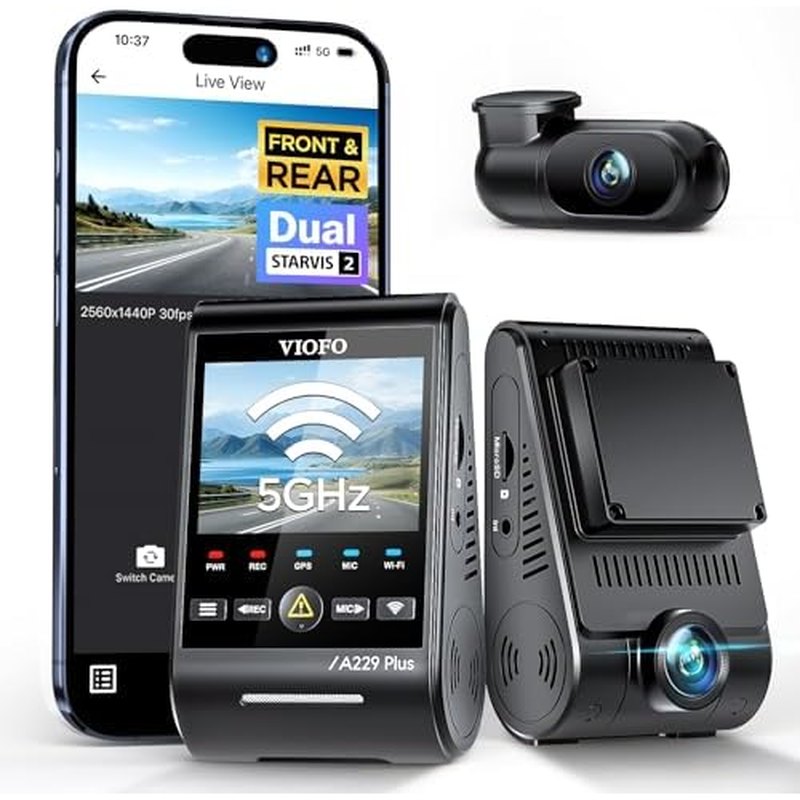
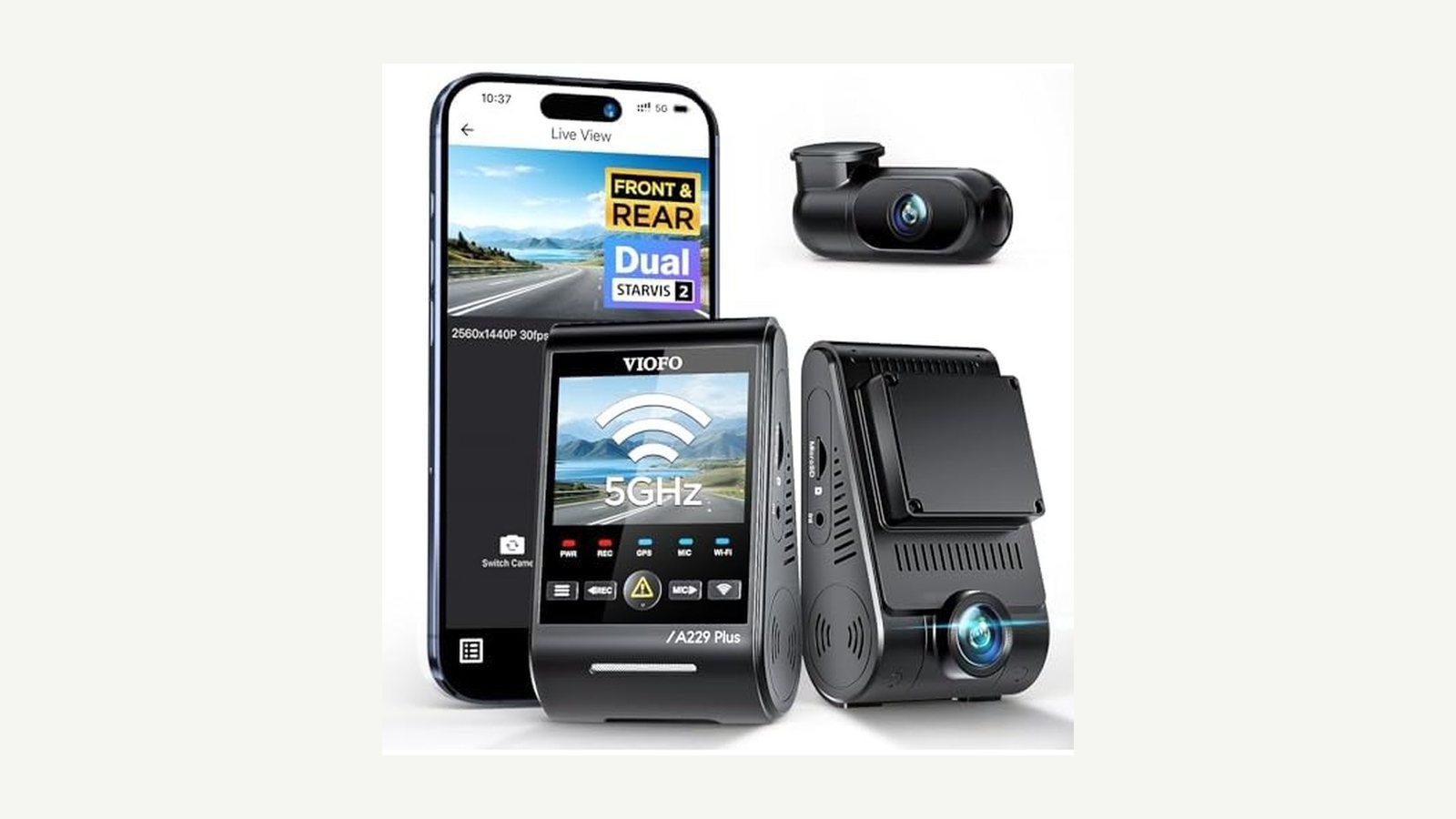
VIOFO A229 Plus 2K Front and Rear Dash Cam
Two Sony STARVIS 2 sensors, 2K front and 1080p rear, HDR, GPS in the mount. It's the best-selling dash cam VIOFO makes (about 4,000 a month, 4.3 stars from 2,100-plus reviews) and it sits in the top 5 of the whole category on Amazon.
2K (1440p) front + 1080p rearSony STARVIS 2 sensorsHDR, GPS, Wi-FiParking mode with hardwire kit
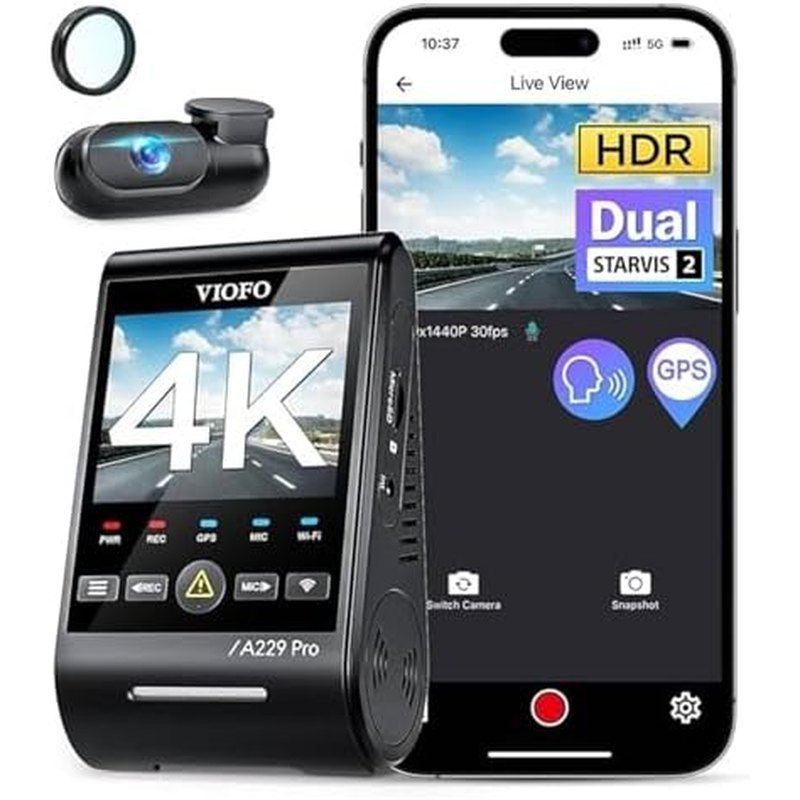
VIOFO A229 Pro 4K HDR Front and Rear Dash Cam
The same two-camera package with a 4K front sensor, which is what you want if reading plates two lanes over matters to you. 4.3 stars from 1,500 reviews and about 2,000 sold a month.
4K front + 2K rearSony STARVIS 2 sensorsHDR, GPS, 5 GHz Wi-FiParking mode with hardwire kit
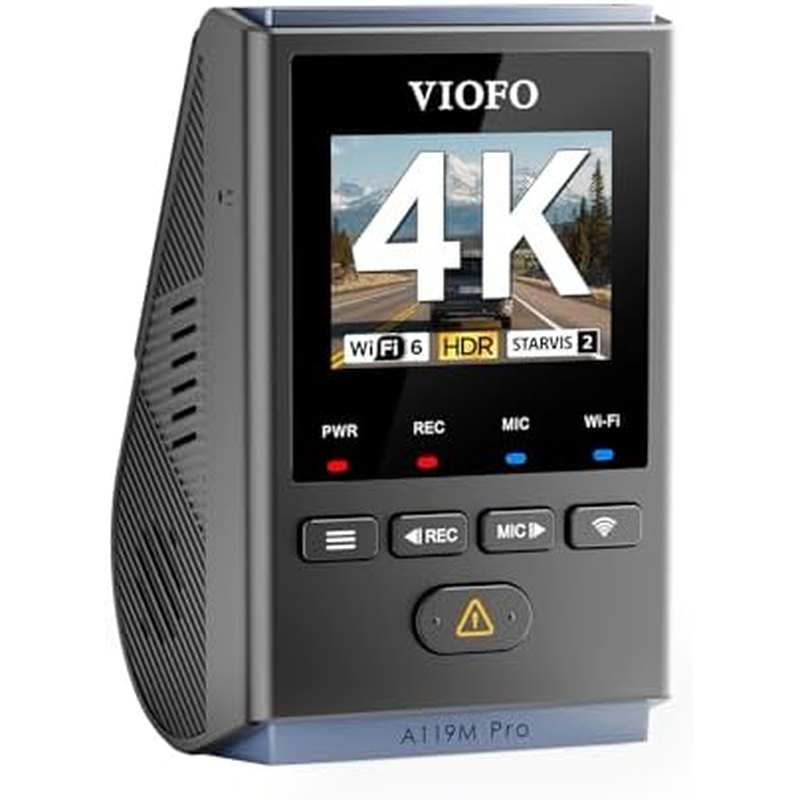
VIOFO A119M Pro 4K HDR Mini Dash Cam
A front-only 4K camera in a body small enough to hide behind the mirror, with Wi-Fi 6 for faster clip downloads. The right pick if you don't want a rear camera and its wiring.
4K front onlySony STARVIS 2 IMX678 sensorCompact wedge bodyWi-Fi 6
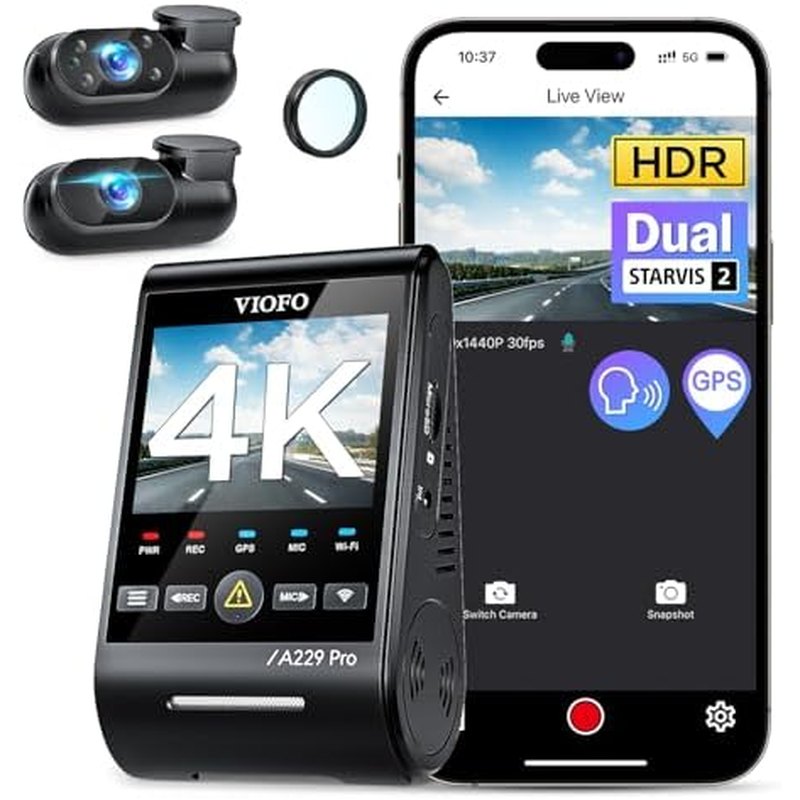
VIOFO A229 Pro 3-Channel Dash Cam (Front, Rear, Interior)
The A229 Pro plus a third, infrared cabin camera. Uber and Lyft drivers, taxi fleets and anyone who wants the inside of the car on record; for everyone else the two-channel version is cheaper and simpler.
4K front + 2K rear + 1080p cabinInfrared interior cameraHDR, GPS, Wi-FiThree cameras to wire
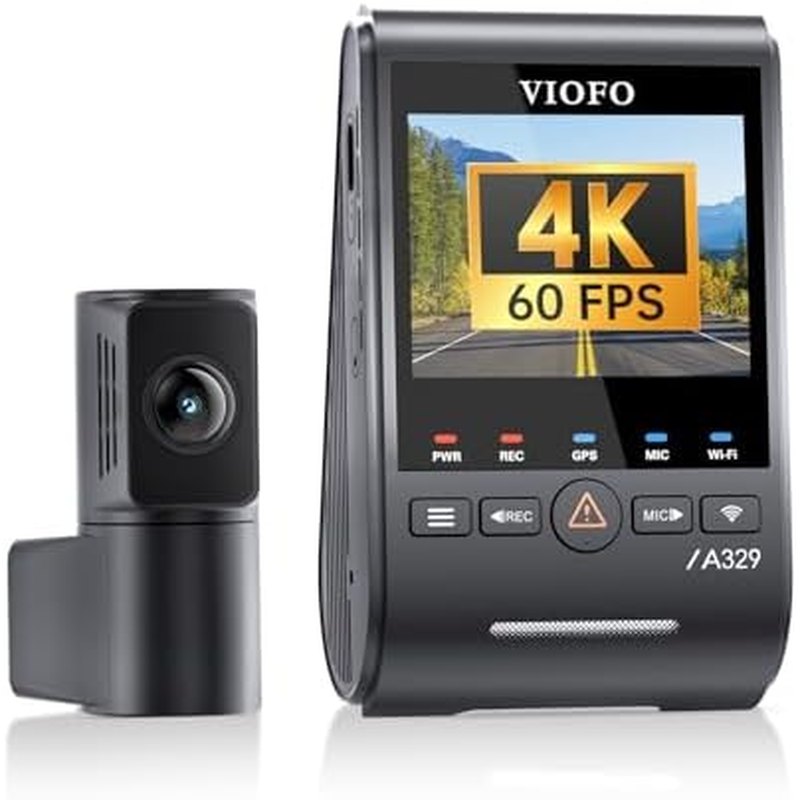
VIOFO A329S 4K 60fps Front and Rear Dash Cam
4K at 60 frames per second, which halves motion blur on plates at speed, plus Wi-Fi 6 and the newest sensors. 4.4 stars from about 300 reviews. Worth it only if you already know why 60 fps matters to you.
4K 60 fps front + rearSony STARVIS 2 HDRWi-Fi 6, GPSHighest price in the line
VIOFO is the dash cam brand that enthusiasts recommend and everyone else has never heard of. It’s a Chinese company that has spent a decade making only dash cams, its firmware is updated more often than anyone else’s, and its A229 series sits at the top of Amazon’s dash cam category on merit rather than marketing. The catch is the naming. A119, A229, A329; Plus, Pro, Ultra; 1CH, 2CH, 3CH. The listings assume you already know what all of that means.
You don’t need to. Three things separate the models: resolution (2K or 4K on the front camera), how many cameras (front only, front and rear, or front, rear and cabin), and frame rate (30 fps on everything except the A329S at 60). Sensor quality, HDR, GPS, parking mode and Wi-Fi are essentially the same across the current line, so once you’ve picked those three things you’ve picked your camera.
We compared the five current VIOFO models sold in the US on specs, price, review volume and the pattern of low-star reviews. We didn’t mount them all in a car; this is a spec comparison plus reading through several hundred owner reviews and the enthusiast-forum consensus. All links are affiliate links to Amazon. VIOFO didn’t send us anything.
The lineup side by side
| Model | Cameras | Front resolution | Frame rate | Price | Rating (reviews) | Best for |
|---|---|---|---|---|---|---|
| A229 Plus | Front + rear | 2K (1440p) | 30 | $180–$190 | 4.3 (2,100+) | Most drivers |
| A229 Pro | Front + rear | 4K | 30 | $270–$280 | 4.3 (1,500) | Sharpest plates |
| A119M Pro | Front only | 4K | 30 | $150–$160 | 4.2 (320) | Small, hidden, no rear wiring |
| A229 Pro 3CH | Front + rear + cabin | 4K | 30 | $300–$310 | 4.3 (530) | Rideshare, fleets |
| A329S | Front + rear | 4K | 60 | $400 | 4.4 (290) | Enthusiasts |
Prices are from the Amazon listings in early September 2026. VIOFO runs coupons in waves; check the box under the price before comparing.
2K or 4K: the A229 Plus is enough for most people
The honest answer on resolution is that the sensor matters more than the pixel count. Every camera on this page uses Sony’s STARVIS 2 sensors with HDR, which is why VIOFO footage at night doesn’t turn headlights into white blobs and plates into smears. On that sensor, the A229 Plus at 2K reads a plate in the next lane, day or night. That’s what a dash cam is for, and it’s why the Plus is VIOFO’s best seller at around 4,000 units a month.
The A229 Pro steps the front camera up to 4K for about $90 more. What you get is legibility at distance: a plate two or three cars ahead, or across an intersection, that’s readable on the Pro and marginal on the Plus. If you drive a lot of highway, or you’ve ever wished you could read a plate that was too far away, that’s worth $90. If you mostly want proof of what happened in the lane next to you, it isn’t. Both include GPS in the mount, so speed and location are stamped on the footage, and both use the same rear camera package.
One camera or three
The A119M Pro is the pick if you don’t want a rear camera at all. It’s a single 4K front camera in a wedge body that sits behind the mirror where you’ll forget it’s there, and it has Wi-Fi 6 so pulling a clip to your phone takes a minute instead of five. At $150–$160 it’s the cheapest way into a 4K VIOFO, and the only wiring is one cable to the 12 V socket. Skip it if you park on the street: a rear camera catches the rear-ender, which is the most common claim you’ll ever need footage for.
The A229 Pro 3-channel adds an infrared cabin camera to the two-camera Pro. If you drive for Uber or Lyft, run a small fleet, or have a reason to record what happens inside the car, it’s the model; the infrared means it works in the dark. For a private car it’s $30 more and one more cable for footage you’ll never watch.
The A329S, and when 60 fps matters
The A329S is VIOFO’s flagship: 4K at 60 frames per second front and rear, the newest STARVIS 2 sensors with HDR, and Wi-Fi 6. Sixty frames a second halves the motion blur on a plate passing at speed, which is the one thing the 30-fps cameras can’t fix with resolution. At $400 it’s priced against BlackVue and Thinkware’s flagships and, on the forums, generally rated ahead of them for image quality. The reviews are strong (4.4 stars) but there are only a few hundred of them, and the low-star ones are about the app rather than the footage. Buy it if you already know 60 fps is what you want; if you had to ask, the A229 Pro will make you happy.
Parking mode and the hardwire kit
All five support parking mode, but only with VIOFO’s hardwire kit, sold separately for around $20–$30. The kit connects to the fuse box, monitors battery voltage so it can’t strand you, and lets the camera watch the car while it’s parked, recording a buffered clip when it senses an impact or motion. It’s the feature that catches the hit-and-run in the supermarket lot. If you want it, budget the kit and an hour of installation (or a mobile installer), and understand that on a car that sits for days the camera will drain the battery unless the kit’s cutoff is set conservatively.
Two more things every VIOFO buyer should know. First, no memory card is included; buy a high-endurance card rated for continuous recording, not a normal phone card, because normal cards fail in a hot car within a year. Second, a CPL filter (about $15) cuts dashboard reflections off the windshield and is the cheapest image-quality upgrade you can make.
What the low-star reviews say
The one- and two-star reviews across all five models are remarkably consistent, and almost none are about picture quality. They’re about the app and Wi-Fi: pairing that took several tries, clip downloads that were slow on the 2.4 GHz models, and firmware updates that needed a computer. The Wi-Fi 6 models (A119M Pro, A329S) draw fewer of these. The second cluster is installation frustration from people who expected plug-and-play; a rear camera is an hour with trim tools. Genuine hardware failures show up at a rate that looks normal for the category, and VIOFO’s warranty replacement gets good marks in the replies.
FAQ
Is VIOFO a good brand?
Among people who follow dash cams closely, it’s the default recommendation for the money: Sony STARVIS 2 sensors across the line, frequent firmware updates, and prices well under BlackVue or Thinkware. The trade-off is a rougher app.
A229 Plus or A229 Pro?
The Plus for most drivers; 2K on this sensor reads plates day and night. The Pro if you want plates readable at distance and $90 doesn’t bother you.
Do I need the hardwire kit?
Only for parking mode. For recording while you drive, the included 12 V socket cable is all you need.
Does it come with a memory card?
No. Buy a high-endurance card (64–256 GB) made for dash cams; ordinary cards die in a hot car.
The bottom line
Most cars: the A229 Plus, because 2K with STARVIS 2 and HDR already reads plates at night and it's the cheapest two-camera VIOFO. Want the sharpest possible front footage: the A229 Pro 4K. Front only, small, hidden: the A119M Pro. Rideshare or a cabin you need on record: the A229 Pro 3-channel. The A329S is excellent and $400; buy it if 60 fps is a requirement, not a curiosity.
What we like
- VIOFO's whole current line uses Sony STARVIS 2 sensors with HDR, which is what separates a dash cam that reads plates at night from one that shows a blur
- Parking mode is a real feature here: with VIOFO's hardwire kit the cameras watch the car while it's parked, with buffered recording so the impact is captured before and after
- Prices are a third to a half below the equivalent BlackVue or Thinkware, and the firmware is updated often, which the enthusiast forums track closely
What to watch
- Nothing here is plug-and-play: expect an hour of tucking cable along the headliner for a rear camera, and a hardwire kit (sold separately) for parking mode
- The app and Wi-Fi transfer are the weakest part of every VIOFO; clips are large, and the review complaints cluster on pairing and slow downloads on the older 2.4 GHz models
- VIOFO doesn't include a memory card; budget $20–$30 for a high-endurance card, and buy that, not a normal one
Junjie Li
Junjie researches and writes every guide on this site. No lab and no sponsors: manufacturer specs, long-term owner reviews and professional test results, then a straight answer on what to buy for each situation.