Power Banks Explained: How Much Capacity You Really Need, What Wattage Means, and Which Ones Fly
The mAh number on the box overstates what you'll get by about a third, wattage decides whether it charges your laptop or just your phone, and the airline limit is 100 Wh. Here's the math and the four we'd buy.

Our picks
Prices checked September 4, 2026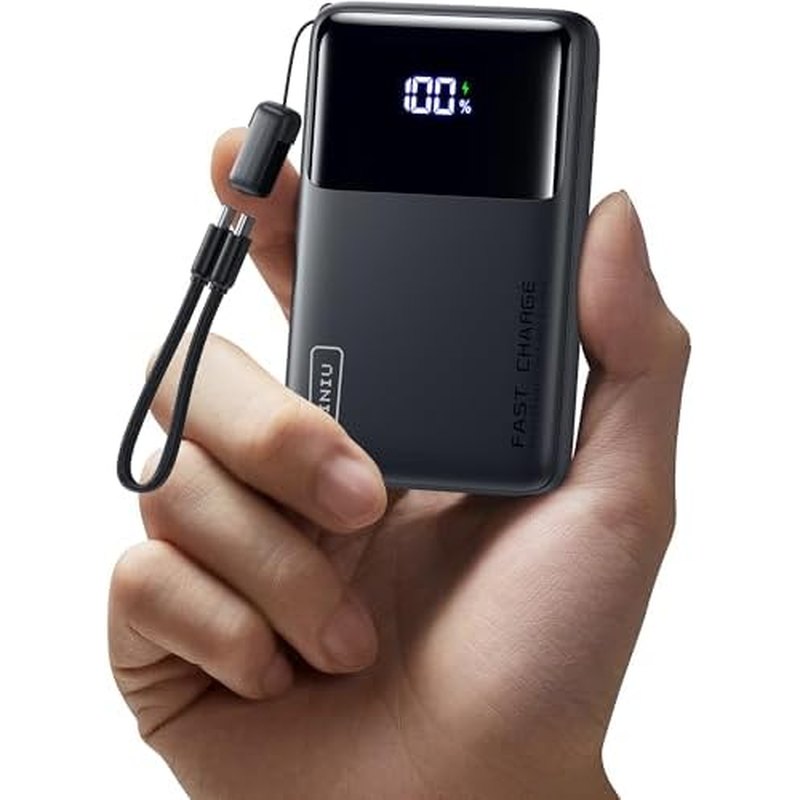
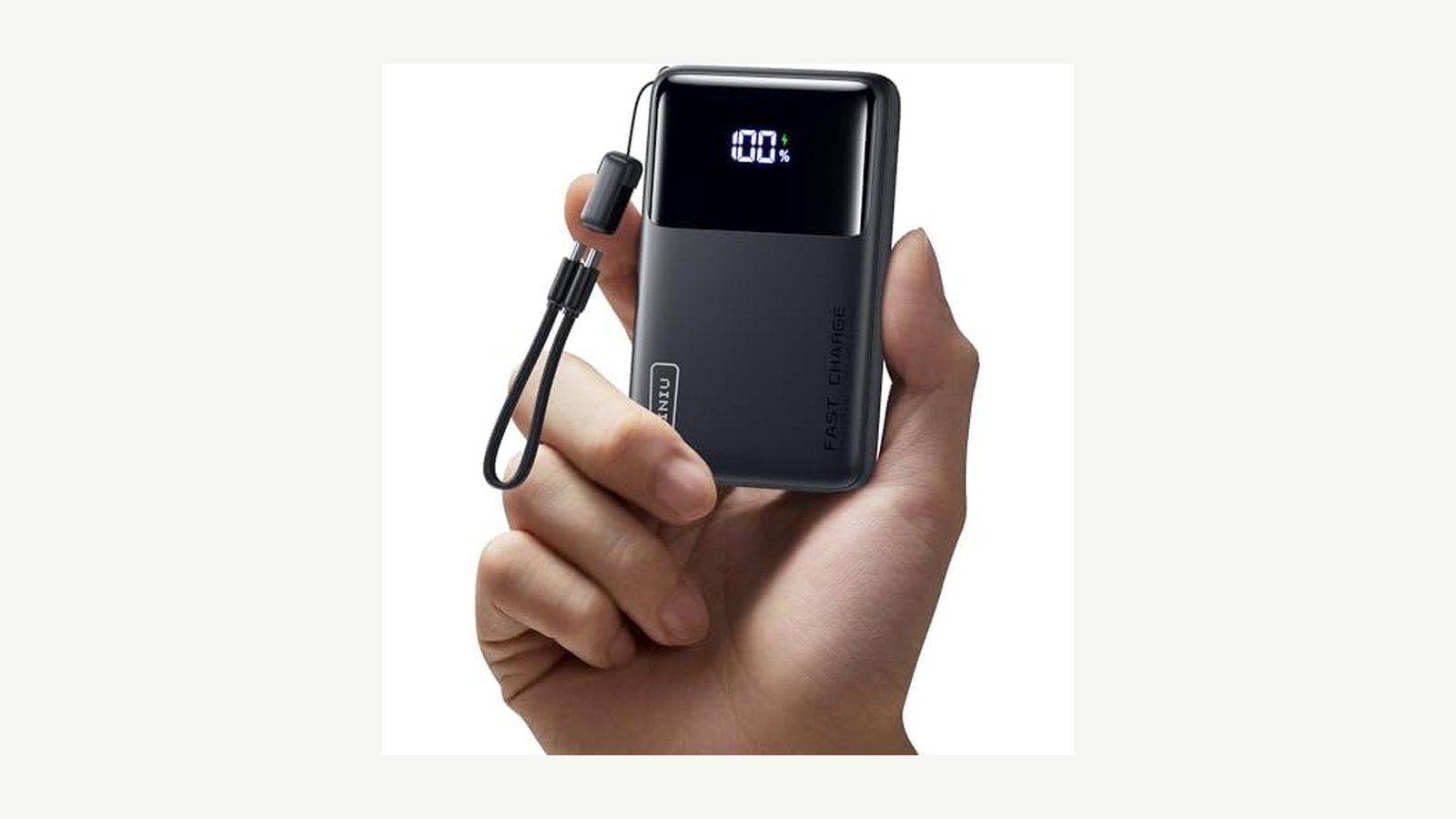
INIU 10,000 mAh 45 W Power Bank
Two full phone charges in a pocketable bank, and 45 W USB-C output — enough to top up a MacBook Air or an iPad, not just a phone. 4.5 stars across 24,000+ reviews, and INIU's warranty is unusually long for the price.
10,000 mAh (~37 Wh)45 W USB-C PDPocket sizeFlight-legal
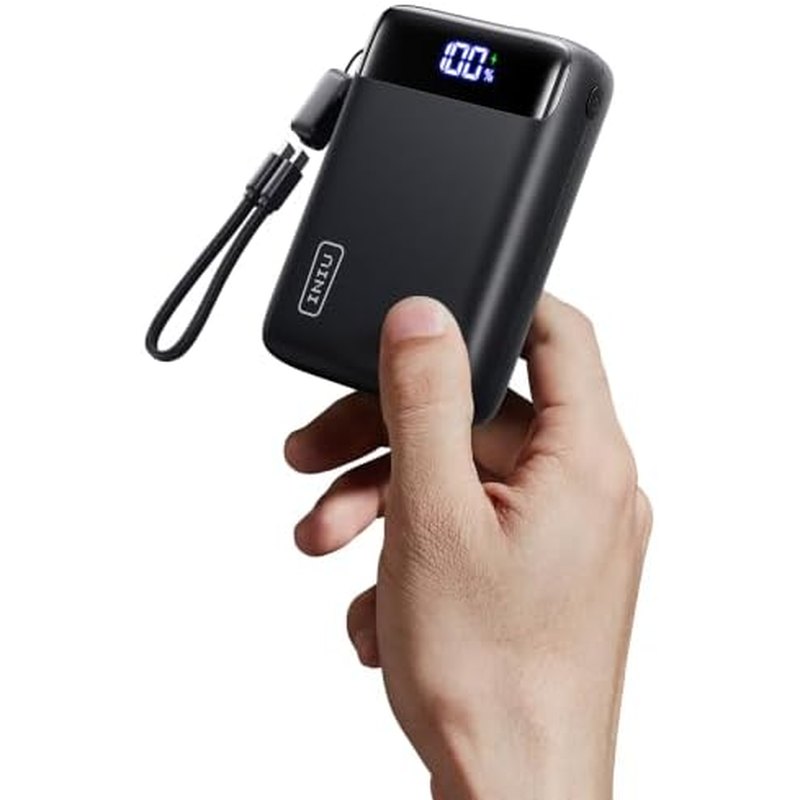
INIU 20,000 mAh 22.5 W Power Bank
Four to five phone charges in one of the smaller 20,000 mAh banks on the market. 22.5 W is plenty for phones and earbuds; it's not a laptop charger. Still under the 100 Wh airline limit.
20,000 mAh (~74 Wh)22.5 WCompact for its classFlight-legal
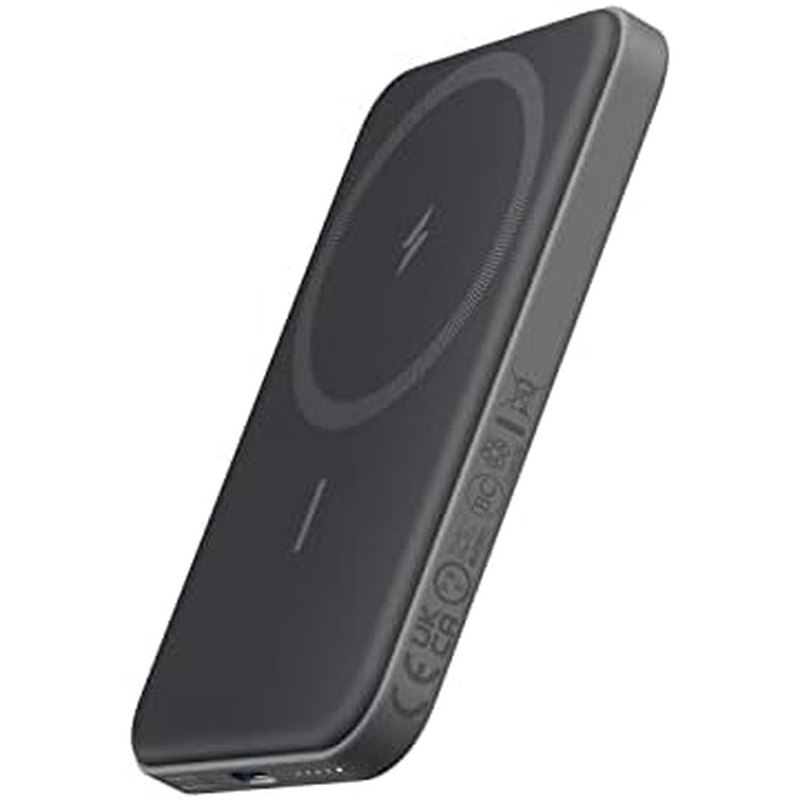
Anker 621 MagGo 5,000 mAh
Snaps to the back of a MagSafe iPhone and charges wirelessly — no cable, no fumbling. 5,000 mAh is roughly one full charge, which is the point: it's for getting through the evening, not a weekend.
5,000 mAhMagnetic wirelessUSB-C in/outSlim
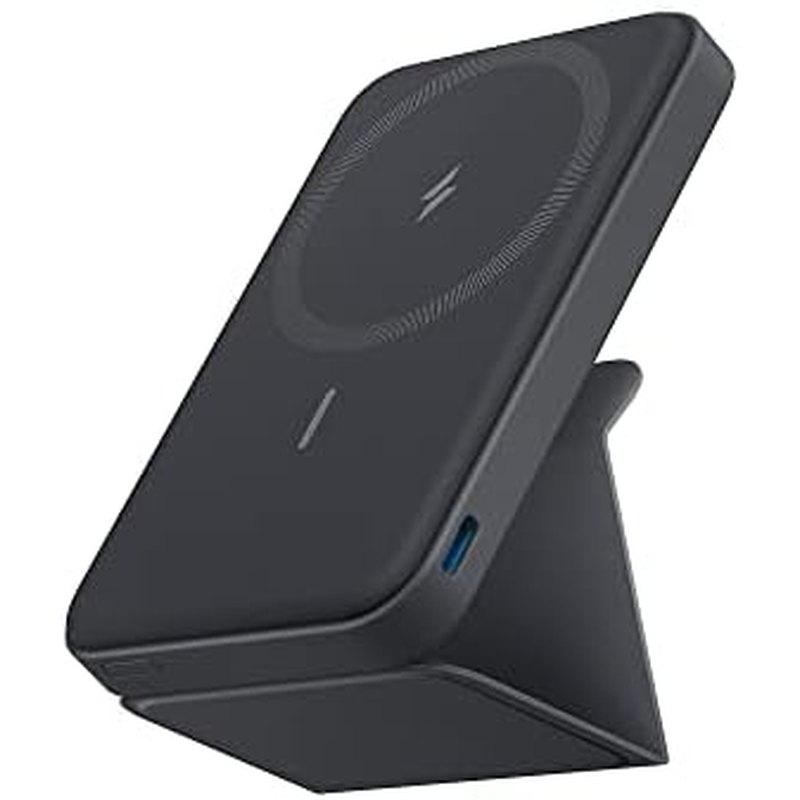
Anker 622 MagGo 5,000 mAh (foldable stand)
Same capacity as the 621 with a fold-out stand, so the phone charges while propped up for a video call or a film on the train.
5,000 mAhMagnetic + standWireless 7.5 WUSB-C
Power bank boxes shout one number — 10,000, 20,000, 30,000 mAh — and it’s the least useful number on the box. It tells you the capacity of the cells inside at their native voltage, not how much of that ends up in your phone. A “10,000 mAh” bank typically delivers around 6,000 to 7,000 mAh to a device. That’s not a scam; it’s physics (voltage conversion and heat). But it means the honest way to shop is in phone charges, not milliamp-hours.
We compared the spec sheets of twenty current banks from INIU, Anker, Baseus, UGREEN and Belkin, read the owner reviews for the two failure modes that actually matter (dying after a few months, and throttling when two devices are attached), and checked every one against the FAA carry-on rule. What follows is the short version.
The three numbers that matter
| Number | What it means | What to look for |
|---|---|---|
| Capacity (mAh / Wh) | How much energy is inside. Divide mAh by ~1,500 for phone charges you’ll actually get. | 10,000 mAh for daily carry; 20,000 for trips |
| Output wattage (W) | How fast it charges — and what it can charge. | 20 W+ for phones; 45 W+ for laptops and iPads |
| Watt-hours (Wh) | The airline number. Wh = mAh × 3.7 ÷ 1,000. | Under 100 Wh = allowed in carry-on, no questions |
A fourth thing to look for isn’t a number: USB-C Power Delivery (PD). That’s the protocol phones, tablets and modern laptops use to negotiate fast charging. A bank that says “PD” or “USB-C PD” will fast-charge an iPhone, a Pixel or a Galaxy; one that lists only “QC” or a proprietary name may not.
How much capacity you need
10,000 mAh — daily carry. About two full charges of a modern phone. It fits in a jacket pocket or the small compartment of a bag, and it’s the size almost everyone should own. Our pick is the INIU 10,000 mAh 45 W, and the 45 W is the reason: at that output it will meaningfully top up a MacBook Air, an iPad Pro or a Steam Deck, which most banks in this size can’t do.
20,000 mAh — trips. Four to five phone charges, or one phone plus a tablet for a long-haul day. The INIU 20,000 mAh 22.5 W is one of the physically smaller banks in this class and has 29,000-plus reviews averaging 4.6 stars. At 22.5 W it’s a phone-and-earbuds bank, not a laptop bank — for that you’d want a 20,000 mAh unit with 65 W output, which costs about twice as much.
5,000 mAh — magnetic. Roughly one charge. That sounds small until you realize the problem with power banks is that you leave them at home. A magnetic bank that snaps onto the back of an iPhone gets carried. The Anker 621 MagGo is the plain version; the Anker 622 adds a fold-out kickstand so the phone charges propped up. Both charge wirelessly at 7.5 W, which is slow, so treat them as “keep the phone alive through the evening,” not “recharge from empty.”
Above 20,000 mAh — usually a mistake. A 30,000 mAh bank weighs well over a pound, takes most of a night to recharge, and at about 111 Wh needs airline approval to fly. Unless you’re camping or working off-grid, the weight is not worth it.
The airline rule, precisely
The FAA (and most other regulators) allow lithium batteries up to 100 Wh in carry-on baggage with no approval, and 101–160 Wh only with airline approval, maximum two. Power banks are never allowed in checked luggage.
To convert: Wh = mAh × 3.7 ÷ 1,000. So:
- 10,000 mAh ≈ 37 Wh — fine
- 20,000 mAh ≈ 74 Wh — fine
- 27,000 mAh ≈ 100 Wh — the ceiling
- 30,000 mAh ≈ 111 Wh — needs approval
Both INIU picks and both Anker picks are well under the limit. Two practical notes from frequent flyers in the reviews: keep the bank where you can reach it (security sometimes asks to see it), and make sure the Wh or mAh is printed legibly on the case — some airports have refused banks with worn-off labels.
Wattage: what actually charges what
- 10–15 W: old-style USB-A output. Charges a phone slowly. Avoid as the only port.
- 20–30 W: fast-charges any phone; charges earbuds, watches, Kindles.
- 45 W: fast-charges a phone and will top up a MacBook Air, iPad Pro, Chromebook or handheld console.
- 65 W and up: laptop territory. Rare below 20,000 mAh.
One thing the box rarely tells you: total output when two devices are attached. Many banks advertise 45 W but split to 15 W + 15 W with two cables. If you regularly charge two things at once, look for the phrase “simultaneous” in the specs or in reviews.
Two we didn’t pick
Anker’s Prime and Nano lines (not affiliate links) are excellent and often faster than the INIU units, at roughly double the price. UGREEN’s Nexode banks (not an affiliate link) are the other strong value option. We chose the INIU banks because owner ratings are as high at half the cost, and INIU’s three-year warranty is longer than most.
FAQ
Why does my 10,000 mAh bank only charge my phone twice?
Because the printed capacity is measured at the cell voltage (3.7 V) and your phone charges at 5 V or higher; converting between them costs about 30% as heat. Two charges from 10,000 mAh is normal.
Can I bring two power banks on a plane?
Yes, as long as each is under 100 Wh. Airlines typically cap the total number of spare batteries at around 20, which nobody hits.
Is wireless charging worth it in a power bank?
Only in the magnetic form. Flat wireless pads on a bank are fiddly to align; a MagSafe-style magnet solves that and makes the bank something you’ll actually carry.
How long should a power bank last?
Roughly 500 full cycles before capacity drops noticeably — three to five years of normal use. The reviews that report early death almost always involve leaving the bank in a hot car.
The bottom line
For daily carry, the INIU 10,000 mAh 45 W: small, two charges, and it will rescue a laptop. For travel, the INIU 20,000 mAh. For an iPhone owner who never remembers cables, an Anker MagGo. Don't buy over 20,000 mAh unless you're camping — the weight isn't worth it and airport security gets interested.
What we like
- 10,000 mAh is the sweet spot: two phone charges, fits a pocket, always allowed on planes
- USB-C Power Delivery at 45 W turns a phone bank into a laptop top-up
- Magnetic banks solve the real problem — you actually carry them
What to watch
- Expect about 60–70% of the printed mAh to reach your phone; conversion losses are normal, not a defect
- Anything over 27,000 mAh (100 Wh) is not allowed in carry-on without airline approval — and never in checked bags
- Cheap 'fast charging' banks often deliver fast output on one port only, and slow to a crawl when two devices are plugged in
Junjie Li
Junjie researches and writes every guide on this site. No lab and no sponsors: manufacturer specs, long-term owner reviews and professional test results, then a straight answer on what to buy for each situation.