The Robot Vacuum That Actually Copes With a Shedding Dog (and Which Features Are Noise)
Pet hair, litter and the occasional accident are the hardest test a robot vacuum faces. Here's which four specs decide whether it survives, which are marketing, and the two models we'd buy.

Our picks
Prices checked September 4, 2026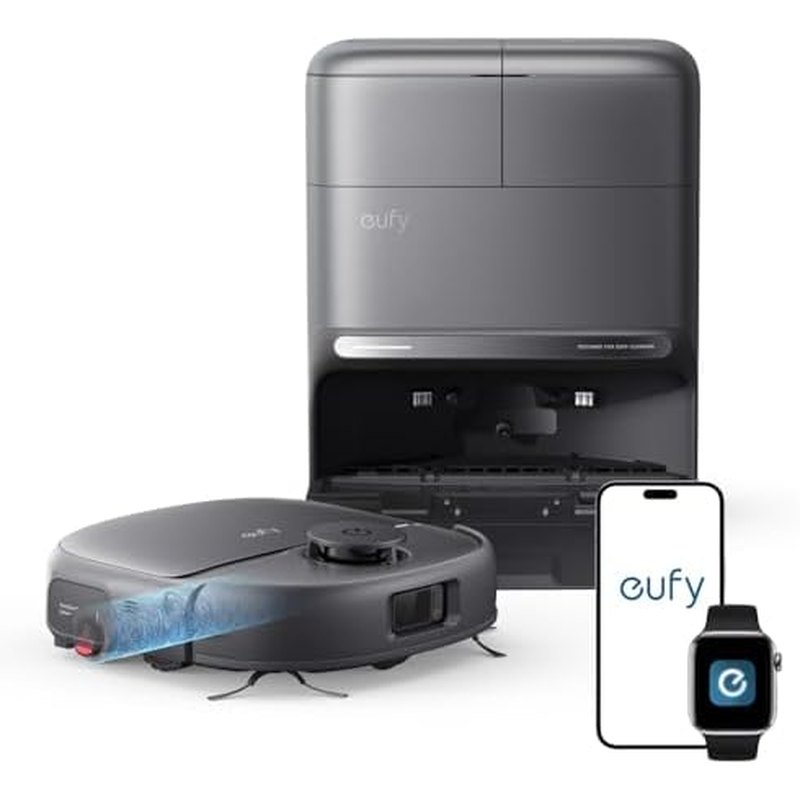
eufy C28 Robot Vacuum and Mop Combo
15,000 Pa suction, a roller mop that washes itself at the dock, and a self-emptying bin — the three things a shedding-dog household actually uses — at a third of the flagship price. 4.3 stars across 59,000+ Amazon reviews.
15,000 PaSelf-empty dockRoller mopVacuum + mop
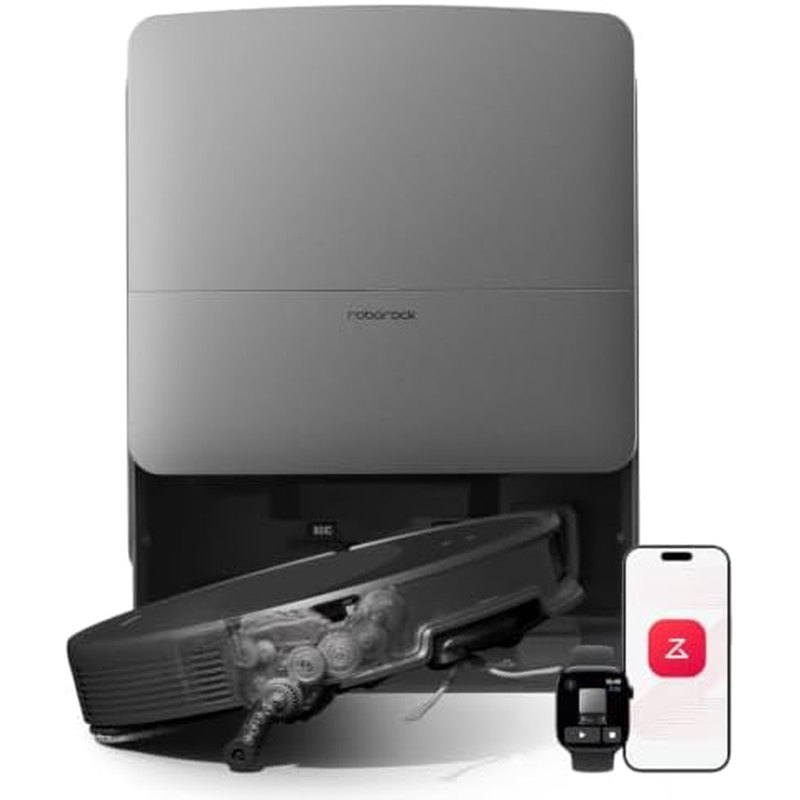
roborock Saros 20
The flagship: 36,000 Pa, camera-based avoidance that recognizes 300-plus object types (including the things a pet leaves on the floor), and a dock that washes, dries and refills. Only worth it if an accident-avoiding robot is the whole point.
36,000 PaAI obstacle avoidanceWash + dry dockUltra-slim body
Pet hair breaks robot vacuums in a specific way. Not dramatically — the robot keeps running — but the bristle brush turns into a felt roll within a week, the bin fills after one room, and the owner quietly goes back to the upright. Reviews of every robot vacuum on the market split into two groups: people without pets, who rate it on how well it navigates, and people with pets, who rate it on how often they have to touch it.
We read through the long-term owner reviews of fourteen current models from eufy, roborock, iRobot, Shark, Dreame and Ecovacs, filtered for the words “dog”, “cat”, “hair” and “litter”, and cross-checked what we found against RTINGS’ brush and pickup tests. Four things decide whether a robot survives in a pet home. Suction, the number every box shouts about, is only one of them and it’s the least important.
The four things that matter for pet homes
| Spec | Why it matters for pets | What to look for |
|---|---|---|
| Self-emptying dock | A pet household fills a robot’s onboard bin in one room. Without a dock you empty it daily, and then you stop. | Any bagged auto-empty base; capacity of 30–60 days is standard |
| Brush type | Bristle brushes wrap long hair; you cut it off with scissors weekly. Rubber rollers don’t. | Dual rubber rollers or a single rubber roller with a hair-cutting comb |
| Obstacle avoidance | Bump sensors don’t see a shoelace, a cable, or a pet accident. Only cameras or structured light do. | “AI” or camera-based avoidance if accidents are a risk; LiDAR-only is fine otherwise |
| Mopping | Litter dust and paw prints on hard floors need a wet pass. | A roller or spinning pads with dock washing; avoid dragged flat pads |
Suction is the fifth. Anything from about 8,000 Pa upward pulls hair out of low-pile carpet; beyond that, differences show up only on thick rugs. The eufy C28 at 15,000 Pa and the roborock Saros 20 at 36,000 Pa both clear the bar. What separates them is the camera.
Our picks, and why the price gap is that big
The eufy C28 is the model we’d put in most pet homes. It has the three features that decide the outcome — a self-emptying dock, a roller mop that the dock washes, and a rubber main brush — and it sells for roughly a third of a flagship. Across 59,000-plus reviews the recurring praise is boring in the right way: “I haven’t emptied it in a month.” The recurring complaint is that the mop water tank needs refilling more often than the marketing suggests, which is true of every combo unit at this price.
The roborock Saros 20 is what you buy when avoidance is the whole point. Its camera system is trained on several hundred object types, and in owner reviews the phrase that keeps appearing is “it went around it” — the cable, the sock, the thing the dog left. It also washes and hot-air-dries its own mop, so the pads don’t smell. At around $1,400 it is a lot of money for a vacuum, and for a house-trained pet it’s more robot than you need. For a puppy, a senior dog, or a cat that objects to its litter tray, the avoidance alone justifies it.
Two well-known alternatives we didn’t pick: the iRobot Roomba j7+ (not an affiliate link) has excellent accident avoidance and a good rubber-roller design, but it doesn’t mop and iRobot’s recent financial trouble makes long-term app support a question. The Shark AI Ultra (not an affiliate link) is a solid budget self-emptying option with a bagless base, which pet owners tend to dislike because emptying it releases a cloud of hair.
Litter, hair and the two-room test
Cat litter is the hardest material a robot vacuum meets. It’s heavy, it scatters, and it wedges into the join between the brush and the housing. Robots with a single rubber roller and a wide intake handle it better than dual-bristle designs. If you have a cat, put the robot’s first run past the litter tray and check whether it left a trail — that’s the two-room test, and it fails more models than the spec sheet suggests.
For dog hair the failure mode is different: wrapping. Long hair from a golden retriever or a husky winds around a bristle roll until the motor strains. Rubber rollers with a comb clear themselves; owners of the eufy and roborock units report cutting hair off the brush “occasionally” rather than weekly.
What about the mop?
Combination vacuum-mops are now the default above about $300, and for pet homes the mop is not a gimmick: paw prints and litter dust on tile don’t lift with suction alone. The distinction that matters is whether the dock washes the mop. Dragged flat pads that you rinse in the sink are the version people stop using. A roller (eufy) or spinning pads (roborock) that the dock cleans get used every day.
One caveat that owners raise repeatedly: a combo unit that mops hard floors and vacuums carpet must lift its mop when it crosses onto carpet. Both of our picks do; several cheaper combos don’t and leave damp streaks on rugs.
Where the money stops helping
- Suction above ~15,000 Pa on hard floors and low-pile carpet: no measurable difference in hair pickup.
- Voice assistants and app scheduling: every model has them; they don’t affect cleaning.
- Mapping accuracy: LiDAR mapping is now standard from about $250 up; paying more doesn’t make the map better, it adds obstacle recognition.
- “Pet mode” buttons: usually just a higher suction preset you could select anyway.
FAQ
Do I need camera-based obstacle avoidance?
Only if there’s a realistic chance of a pet accident or you have cables and small objects on the floor. Otherwise LiDAR navigation plus bump sensors is fine and saves several hundred dollars.
Bagged or bagless auto-empty dock?
Bagged. A bagless base you empty by hand puts the hair and dust back into the air — exactly what pet allergy sufferers are trying to avoid. Bags cost a few dollars a month.
Will a robot vacuum replace my upright?
For daily maintenance, yes. For deep-cleaning thick rugs and stairs, no. Pet owners who are happiest with their robot run it daily and keep a stick vacuum for stairs and upholstery.
How often does the mop pad need attention?
With a self-washing dock, weekly at most: empty the dirty-water tank, refill the clean one, and check the pad for hair. Without a washing dock, after every run.
The bottom line
For a house with one or two shedding pets, buy the eufy C28 and stop reading: self-emptying, rubber roller, real mop, half the price of a flagship. If your pet is not reliably house-trained, or you have expensive rugs, the roborock Saros 20's object recognition is the one upgrade that's worth paying for. Skip anything without a self-emptying dock, whatever the suction number says.
What we like
- A self-emptying dock is the single feature that decides whether a pet household keeps using the robot after month two
- Rubber roller brushes shrug off long hair that wraps around bristle brushes within a week
- Mid-range models now include the suction and mopping that were flagship-only two years ago
What to watch
- Suction numbers above ~10,000 Pa stop mattering on hard floors; brush design and dock matter more
- Camera-based obstacle avoidance is the only thing that reliably dodges pet accidents, and it costs a lot
- Combo vacuum-mop units need their water tanks emptied and pads washed; the 'hands-off' promise has limits
Junjie Li
Junjie researches and writes every guide on this site. No lab and no sponsors: manufacturer specs, long-term owner reviews and professional test results, then a straight answer on what to buy for each situation.