The Knife Set Beginners Should Actually Buy (It's Smaller Than You Think)
Skip the 15-piece block. One good 8-inch chef's knife does most of the work; here's when a $35 coated set makes sense instead, and the four knives and sets we'd put in a first kitchen.

Our picks
Prices checked September 4, 2026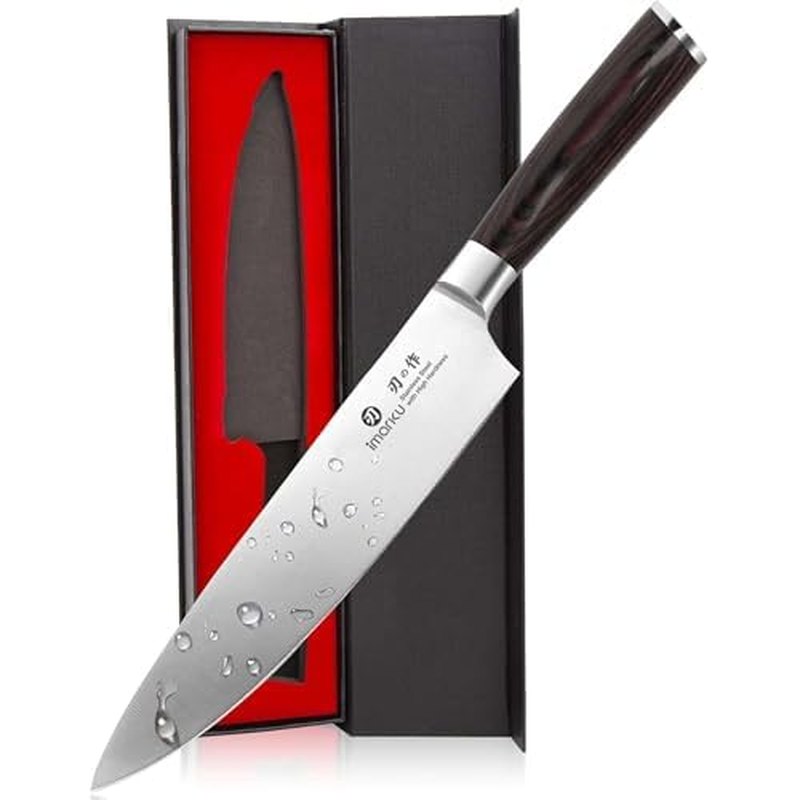
imarku 8-Inch Chef Knife
One well-ground 8-inch blade in a high-carbon stainless that sharpens easily, with a pakkawood handle, for the price of a mediocre block; 4.6 stars across 9,600-plus reviews.
8 in bladeHigh-carbon stainless steelPakkawood handleHand wash only
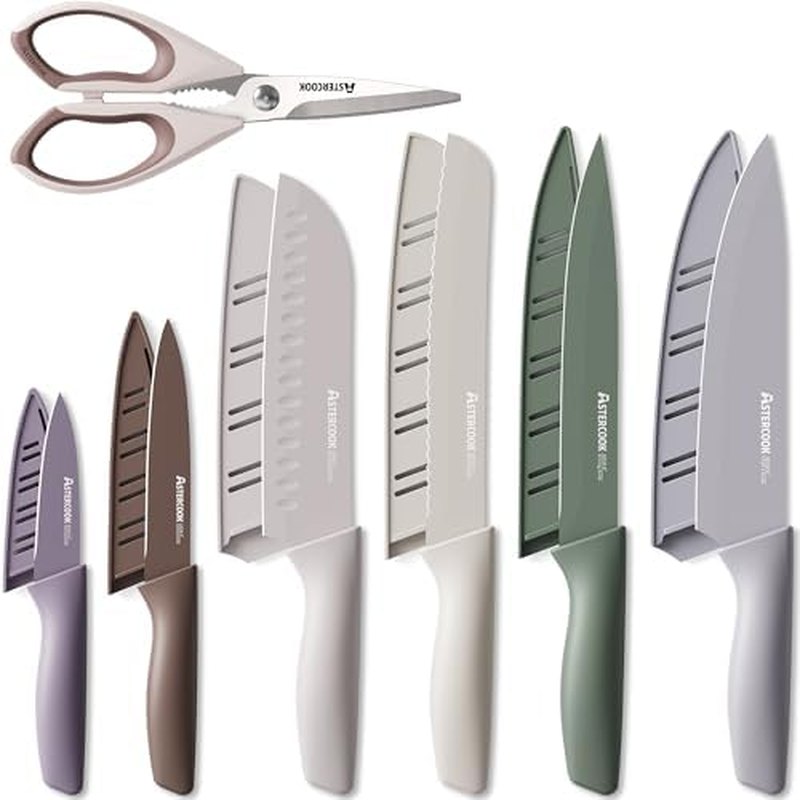
Astercook 13-Piece Knife Set
A coated stainless knife for every basic job, each with its own blade guard, so a first kitchen is equipped in one order with no block on the counter; 4.8 stars from 6,300-plus reviews.
13 pieces incl. 6 blade guardsAnti-rust coated stainlessNo block neededDishwasher safe
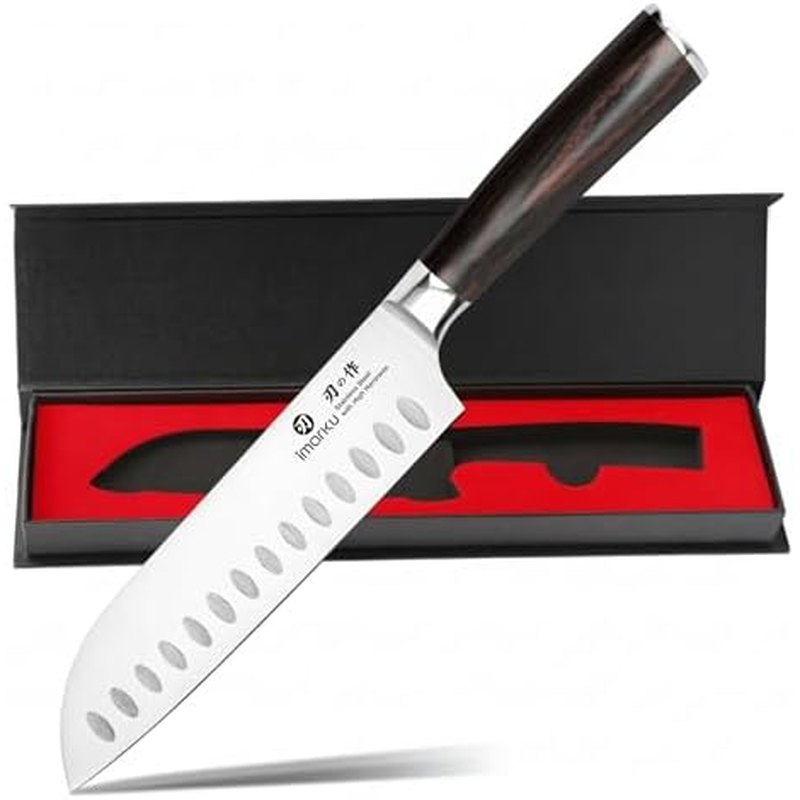
imarku 7-Inch Santoku
Shorter, flatter and lighter than the 8-inch chef's knife, which suits push-cutting and smaller hands, in the same steel and handle as its sibling.
7 in bladeHigh-carbon stainless steelFlat santoku profileHand wash only
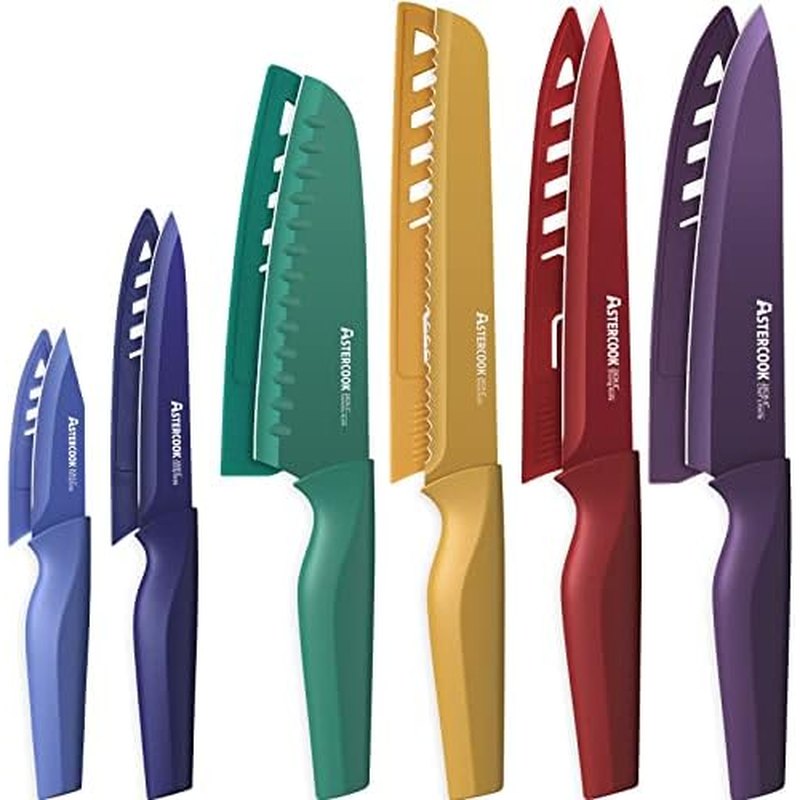
Astercook 12-Piece Color-Coded Set
Six color-coded knives and six matching guards for about the price of one mid-range paring knife; the colors double as a cross-contamination system for raw meat and produce.
6 knives + 6 guardsColor-coded coatingStainless steelDishwasher safe
The best knife set for a beginner is one knife. An 8-inch chef’s knife does eighty or ninety percent of the cutting in a home kitchen, and a good one costs about $30. Add a $10 paring knife and a $15 serrated bread knife when you find yourself needing them and you’ve spent less than a fifteen-piece block costs and ended up with better steel.
That’s the answer for most people, and the imarku 8-inch below is the knife we’d hand them. The exception is the person equipping a first kitchen from nothing on a tight budget, or setting up a college apartment, or buying for someone who genuinely won’t maintain a knife. For them a cheap coated set like Astercook’s makes sense, and we’ll say exactly what you’re trading for the convenience.
We didn’t run edge-retention tests. This is a comparison of steel, construction and price across the four products below and the non-affiliate Victorinox we use as a benchmark, plus a read through the low-star reviews on each to see what actually goes wrong. The imarku and Astercook links pay us a commission; the Victorinox does not.
The five knives and sets side by side
| What you get | Steel and handle | Price | Buy it if | |
|---|---|---|---|---|
| imarku 8-inch chef’s knife | One Western-profile chef’s knife in a gift box | High-carbon stainless, pakkawood handle, hand wash | $30–$40 | You want the one knife that matters and will keep it sharp |
| imarku 7-inch santoku | One santoku, flatter and shorter | Same steel and handle as the 8-inch | $27–$40 | Smaller hands, or you push-cut rather than rock |
| Astercook 13-piece set | Seven tools and six blade guards, no block | Coated stainless, dishwasher safe | $35 | You’re furnishing a kitchen from zero in one order |
| Astercook 12-piece color-coded set | Six color-coded knives, six matching guards | Coated stainless, dishwasher safe | $20–$25 | Tightest budget, or you want color-coding for raw meat vs. produce |
| Victorinox Fibrox Pro 8-inch (not an affiliate link) | One stamped chef’s knife | Swiss stainless, textured thermoplastic handle | About $50 | You want the knife culinary schools hand out: light and no-nonsense |
Why one chef’s knife beats a block
Watch anyone who cooks daily and count the knives they pick up in a week. It’s a chef’s knife, a paring knife occasionally, and a bread knife on weekends. The boning knife, the cleaver, the six steak knives and the “utility” knife in a fifteen-piece block are either specialty tools you’ll buy when a need shows up or filler that exists to raise the piece count.
The chef’s knife is also where quality shows. Its blade does the long slicing strokes and the rocking chops that expose a poorly ground edge or a soft steel. Paring and bread knives are forgiving: a $10 paring knife with a fresh edge peels an apple as well as a $60 one, and a serrated bread knife saws through crusty loaves for years without sharpening.
So the budget math for a beginner is simple. Put the money into the chef’s knife, buy the other two cheaply, and buy a sharpener.
The imarku 8-inch: the knife we’d hand a beginner
imarku labels this a “Japanese chef knife,” which is marketing. The blade profile is a Western chef’s knife with a curved belly for rocking cuts, and the steel is a German-grade high-carbon stainless rather than a hard Japanese alloy. That’s good news for a first knife. Softer steel chips less when you twist through a squash or clip a chicken bone, and it sharpens on any pull-through in a minute. The maker quotes a hardness in the high fifties on the Rockwell scale, which is the same territory as Wüsthof and Zwilling.
The handle is pakkawood, a resin-stabilized laminate that doesn’t swell or crack the way plain wood does, and there’s a bolster where the blade meets the handle for a pinch grip. It arrives sharp. At around $30 with 4.6 stars across more than 9,600 reviews, it’s the highest-rated knife at its price that we’d trust. The recurring low-star complaint on high-carbon knives at this price, imarku included, is rust spots after a trip through the dishwasher, which is user error on any high-carbon blade. Hand wash it.
If the 8-inch feels long, the imarku 7-inch santoku uses the same steel and handle in a shorter, flatter blade. Santokus suit push-cutting (straight down, no rocking) and smaller hands, and the flat edge makes full contact with the board on each stroke. Many people who share a kitchen end up with one of each.
The Victorinox Fibrox Pro 8-inch is our benchmark at about $50 (not an affiliate link; we earn nothing on it). It’s stamped rather than forged, so it’s lighter, with a grippy plastic handle and no bolster. It’s the knife most culinary schools issue and most test kitchens recommend. It suits people who like a light knife; the imarku suits people who like heft. Either is a knife you’ll use for a decade.
When a coated set makes sense, and what you’re trading
The Astercook 13-piece and 12-piece color-coded sets are a different category of product. The blades are stainless steel under a colored non-stick coating, they come with a plastic blade guard for each knife instead of a block, and the listings say dishwasher safe. At $35 and $20 respectively, they cost less than one mid-range paring knife.
Read the piece count carefully. In the 12-piece set, six of the twelve pieces are the guards, so you’re buying six knives. The 13-piece is seven tools plus six guards. Both cover the usual lineup of chef’s, bread, carving, santoku, utility and paring knives, which is more knives than a beginner needs, but at this price the redundancy costs almost nothing.
Here’s the honest tradeoff. Coated blades have a known failure mode: the coating wears at the edge with use and can chip or flake over time, and the dishwasher accelerates it. The 4.7 and 4.8 star ratings reflect how these sets feel in the first months, when they’re sharp and look great. Treat one as a two- or three-year kitchen starter, not a lifetime purchase, and hand wash it if you want the longer end of that range. The color-coding on the 12-piece is genuinely useful: a red knife for raw meat and a green one for produce is a cross-contamination system that takes no thought.
We’d buy an Astercook set for a first apartment, a rental, a vacation cabin or a kid moving out. We’d buy the imarku for anyone who plans to cook for the next ten years.
Steel and handles: the short version
Most kitchen knives are stainless, and the differences that matter to a beginner are hardness and edge angle. German-style steel (Wüsthof, Zwilling, imarku, Victorinox) is a little softer, ground to a sturdier edge, forgiving of abuse and quick to sharpen. Japanese-style steel (Shun, Global, Miyabi) is harder, thinner and sharper, stays sharp longer, and chips if you twist it or hit bone. Start German-style. Move to Japanese when you know you’re careful.
Forged versus stamped is overstated. Forged knives are heavier with a bolster; stamped are lighter and cheaper. The Victorinox is stamped and outperforms plenty of forged knives. Hold the handle if you can. Full tang (steel visible along the spine of the handle) adds durability, textured handles grip better wet, and a rounded spine is easier on your index finger during a long prep.
The part beginners skip: sharpening and storage
None of the knives above come with a sharpener, and a dull knife is more dangerous than a sharp one because it slips. A honing rod, about $15, realigns the edge in ten seconds before each use; an actual sharpener removes metal and is needed a few times a year. A decent pull-through sharpener costs about $20 and is adequate for any knife on this page; a whetstone is better and worth learning eventually.
Storage protects the edge. Loose in a drawer, knives bang into each other and dull in weeks. The Astercook guards solve this for free. For the imarku, a magnetic strip or an in-drawer block costs $15–$25 and is a better use of the money than a countertop block that collects dust. Don’t put any of these in the dishwasher, coated or not; the heat, detergent and rattling wreck edges and handles.
FAQ
Chef’s knife or santoku for a first knife?
Chef’s knife if you rock-chop and have average or large hands; santoku if you push-cut or have smaller hands. If you don’t know which you do, the 8-inch chef’s knife is the safer default because it does more jobs.
Is a $30 knife really good enough?
For a home cook, yes. What separates knives over ten years is maintenance, not price. A $30 imarku that gets honed weekly and sharpened twice a year outperforms a $200 knife that doesn’t.
What about kitchen shears?
Often the most-used tool in a block. If the set you buy includes them, check that they come apart for cleaning. If it doesn’t, a separate pair costs $10–$15 and gets used constantly.
The bottom line
Most beginners should buy one imarku 8-inch chef's knife, add a cheap paring and bread knife when they need them, and spend the savings on a sharpener. If you're furnishing a kitchen from zero on a tight budget, the Astercook 13-piece set does everything at once for $35, with the 12-piece color-coded set as the $20 fallback. Smaller hands or a preference for push-cutting: take the imarku 7-inch santoku instead of the chef's knife.
What we like
- One $30 chef's knife in decent steel outcuts every knife in a $150 block; the imarku 8-inch is that knife for most beginners
- Astercook's coated sets arrive sharp, include a guard per blade, and cost less than a single mid-range paring knife, which is a fine way to furnish a first apartment
- A 7-inch santoku is the right answer for smaller hands or anyone who push-cuts rather than rocks, and costs no more than the chef's knife
What to watch
- Coated blades wear at the edge and can flake with dishwasher use; treat a coated set as a two- or three-year purchase, not an heirloom
- Piece counts are padded: in the 12-piece set, six of the pieces are the blade guards
- None of these ship with a way to sharpen them; budget $15–$30 for a pull-through sharpener or a whetstone on day one
Junjie Li
Junjie researches and writes every guide on this site. No lab and no sponsors: manufacturer specs, long-term owner reviews and professional test results, then a straight answer on what to buy for each situation.