Cast Iron or Carbon Steel: Which Skillet to Buy First (and the Two We'd Get)
Both sear hard and last for decades; the real choice is weight versus heat response. Which one fits your stove and your dinners, and the lightweight cast iron we'd actually buy.

Our picks
Prices checked September 4, 2026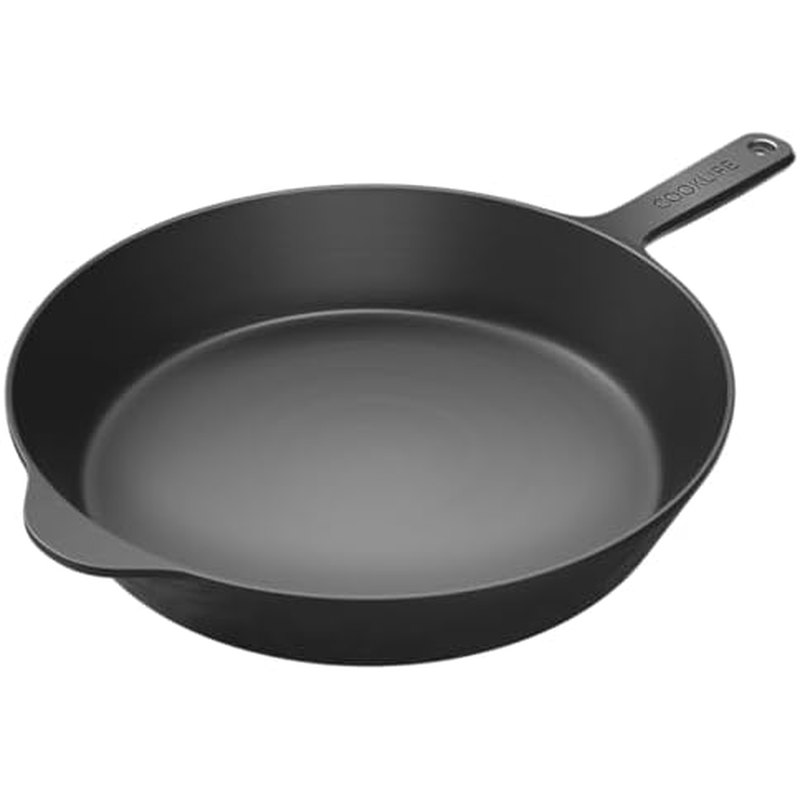
COOKLIFE 12-Inch Lightweight Cast Iron Skillet
A machined-smooth cooking surface out of the box and a thinner casting that takes the sting out of a 12-inch pan, so you get cast iron's stored heat without the two-handed lift that leaves a Lodge in the cupboard.
12 inPre-seasonedPolished cooking surfaceOven, grill and campfire safe
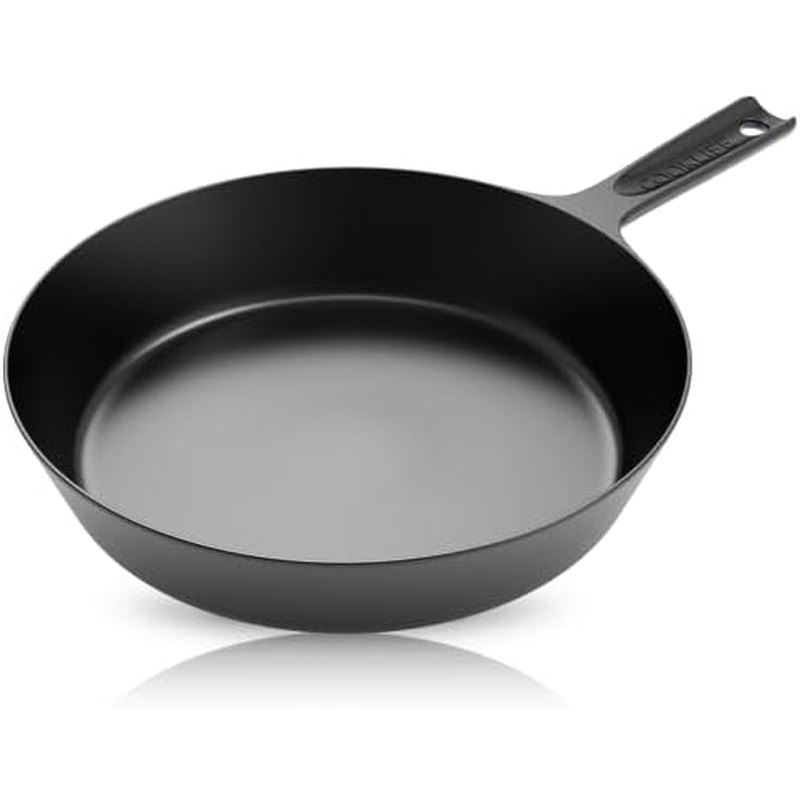
COOKLIFE 10-Inch Lightweight Cast Iron Skillet
The same smooth surface and lighter casting in the size that suits two eggs, one steak or a small cornbread, and the one you can move one-handed while it's hot.
10 inPre-seasonedSmooth polished surfaceLighter than a standard casting
If you’re buying your first bare-metal skillet, buy cast iron. If you already own one and want a pan for eggs, fish and weeknight sautés, buy carbon steel. That’s the whole decision for most people, and the rest of this guide is about the exceptions: cooks with a small burner, cooks who don’t want to lift eight pounds, and cooks on induction.
The two pans get lumped together because they share a chemistry. Both are nearly pure iron (carbon steel actually has less carbon than cast iron, which sounds backwards but is true), both build up a slick layer of polymerized oil called seasoning, and both go from stovetop to a 500°F oven to a campfire without complaint. Where they part ways is thickness. Cast iron is poured into a mold and comes out thick and heavy; carbon steel is pressed from sheet and comes out thin and light. Almost every practical difference follows from that.
We didn’t run a lab test. What follows is a spec comparison across the current Lodge, COOKLIFE, Matfer Bourgeat and de Buyer lines, plus a long read through owner reviews with an eye for the complaints that repeat. The two COOKLIFE pans are affiliate links; the Lodge, Matfer and de Buyer pans are not, and we name them because they’re the honest comparison.
The two pans side by side
| Cast iron | Carbon steel | |
|---|---|---|
| How it’s made | Poured into a sand mold; thick walls | Stamped or spun from sheet steel; thin walls |
| Weight of a 12-inch | About 8 lb for a traditional Lodge; lightweight castings like COOKLIFE’s cut that noticeably | About 5–6 lb |
| Time to preheat | Slow; several minutes on a medium burner | Fast; a couple of minutes |
| Holds heat when cold food hits | Very well | Moderately |
| Responds when you turn the dial | Sluggishly | Quickly |
| Surface out of the box | Pre-seasoned; pebbly on a Lodge, machined smooth on a COOKLIFE | Bare steel under a wax coat; you season it |
| Strongest at | Steak, cornbread, deep frying, oven roasting | Eggs, crepes, fish, stir-fries |
| What we’d buy | COOKLIFE 12-inch or 10-inch; Lodge 10.25-inch, about $25 (not an affiliate link) | Matfer Bourgeat 11 7/8-inch or de Buyer Mineral B 12.5-inch, about $80–$100 (not affiliate links) |
Weight is the difference you’ll feel every day
The spec that decides whether a pan gets used isn’t searing performance. It’s whether you’ll reach for it on a Tuesday. A traditional 12-inch cast iron skillet weighs around eight pounds empty; add a pound of chicken thighs and a pour of pan sauce and it’s a two-handed lift out of the oven. Read the low-star reviews on any big cast iron pan and the pattern isn’t about cooking. It’s about weight, a handle that gets too hot, and a pan that lives in a cupboard because moving it is a chore.
Carbon steel solves this by being thinner. A 12-inch Matfer Bourgeat comes in around five and a half pounds, and the long, angled handle balances the pan so one hand can tilt it to baste or slide an omelet out. Restaurant cooks use carbon steel almost exclusively for exactly this reason: they lift pans hundreds of times a shift.
The newer answer is lightweight cast iron. COOKLIFE’s 12-inch and 10-inch skillets are cast thinner than a Lodge and machined smooth on the cooking surface, which puts them between the two traditional camps: more stored heat than carbon steel, less strain than a classic casting. The tradeoff is real but small. A thinner casting holds a little less heat, so a cold steak drops the surface temperature slightly more than it would in a Lodge. For a home burner that’s a fair trade; for a restaurant flat-top it wouldn’t be.
Heat: mass versus speed
Thick cast iron is slow to heat and slow to cool. On a small burner it also heats unevenly at first, with a hot spot over the flame and cool edges, until it has been on the stove for five minutes or more. Once it’s saturated, though, nothing at home holds heat like it. Drop a steak on and the surface barely flinches, which is what gives you a crust instead of gray steam. Deep frying is the other place this pays off: the oil temperature stays steady when you add food.
Carbon steel does the opposite. It’s up to temperature in a couple of minutes, and when you turn the burner down the pan actually cools, so you can rescue an omelet that’s browning too fast. The cost is that a crowded pan of cold vegetables pulls the temperature down further than in cast iron, so you cook in smaller batches or accept a little steaming.
On induction both are magnetic and work well. Cast iron’s heavy flat base is at home there. Very thin carbon steel can warp under aggressive induction settings, which is an argument for the thicker Matfer and de Buyer gauges over bargain pans, and for preheating on medium rather than max.
Seasoning, and the smooth-surface question
Both pans need seasoning, and they arrive in different states. Most cast iron sold today comes pre-seasoned and is usable the first night. Carbon steel ships with a protective wax or oil coat that has to be scrubbed off with hot water and soap, then seasoned from scratch: a thin coat of oil, a hot oven or hot burner, repeated a few times. Expect it to look blotchy and brown for the first month. That’s normal and the pan is fine.
Surface finish is where the modern castings changed the conversation. A Lodge comes with a pebbly texture from the sand mold, and seasoning has to fill that texture before eggs release cleanly, which takes months of use. Carbon steel is smooth from the factory and gets slick faster once seasoned. COOKLIFE machines its cooking surface smooth before seasoning, so it starts roughly where a Lodge ends up after a year. Smooth surfaces also show neglect faster: a slick pan left wet in the sink will spot with rust overnight, where a rough Lodge might just look dull.
Day-to-day care is identical. Cook with some fat, skip long simmers of tomato sauce or wine while the seasoning is young, wash with hot water and a brush (a little soap is fine), dry on the burner, wipe with a film of oil.
Which pan for which stove
Gas. Either. This is the easy case; the only questions are weight and what you cook.
Induction. Cast iron first. Its flat, heavy base couples well and won’t warp. If you want carbon steel, buy a thick one and keep the power setting moderate.
Glass-top electric. Both work if the base is flat and you lift rather than slide. A dropped eight-pound skillet can crack the glass, which is a point for the lighter COOKLIFE casting or for carbon steel.
Small burners or apartment stoves. Carbon steel, or a 10-inch cast iron rather than a 12. A big cast iron pan on a small coil never heats evenly.
Eggs most mornings. Carbon steel, or a smooth-surfaced cast iron. Pebbly cast iron will get there, but not this year.
What we’d buy
For a first skillet we’d take the COOKLIFE 12-inch lightweight cast iron. It’s pre-seasoned, the surface is machined smooth, and it’s cast thin enough that the weight complaint mostly goes away. It lists at $100 and was selling around $76 when we checked, which is more than a Lodge and less than any carbon steel pan we’d recommend. Twelve inches fits two steaks, a whole chicken cut in pieces, or a skillet cornbread for six. For one or two people the COOKLIFE 10-inch is the same pan scaled down and the one you can move one-handed while hot; it’s the size we’d use for two eggs and a single strip steak.
If you’d rather have the classic, the Lodge 10.25-inch costs about $25 and will last a century (not an affiliate link). It’s heavier and rougher than the COOKLIFE, and it’s the pan to buy if you plan to camp with it, abuse it, or hand it down.
For carbon steel we’d buy the Matfer Bourgeat 11 7/8-inch or the de Buyer Mineral B 12.5-inch, both around $80–$100 (not affiliate links; neither pays us anything). Matfer’s welded handle has no rivets to catch food; de Buyer’s is riveted and slightly heavier. Both are thick enough for induction and both become genuinely slick after a few weeks of use.
FAQ
Which is more nonstick once seasoned?
Carbon steel, slightly, because its surface is smoother and the seasoning builds evenly. A machined cast iron pan like the COOKLIFE closes most of that gap. Neither will match a new PTFE pan for a dry-fried egg on day one; both will beat it in five years.
Is one better for a beginner?
Cast iron. It arrives seasoned, tolerates mistakes, costs less, and the rough-surface models hide a lapse in care. Carbon steel asks for one evening of setup and a few weeks of patience, then rewards you with a lighter, faster pan.
Do I need both?
Not to start. The most common end state among people who cook a lot is a 10- or 12-inch cast iron for high-heat and oven work and a 12-inch carbon steel for everything else. Buy the one that matches your three most common dinners; you’ll know within a year whether you want the other.
The bottom line
If you're buying one pan, buy cast iron: the COOKLIFE 12-inch gives you the sear and the oven versatility without the weight that keeps most big skillets in the cupboard. Solo cooks should take the COOKLIFE 10-inch instead. If eggs, fish and stir-fries are most of your dinners, or you already own cast iron, a Matfer Bourgeat or de Buyer carbon steel pan (not affiliate links) is the second pan we'd add.
What we like
- Cast iron's stored heat gives the hardest sear and the most forgiving seasoning; a smooth-polished, lighter casting removes its two classic complaints
- Carbon steel heats in a fraction of the time, responds when you turn the dial, and is the better pan for eggs, fish and anything you toss
- Both are induction-compatible, oven-safe at any temperature a home oven reaches, and will outlive every nonstick pan you ever buy
What to watch
- A traditional 12-inch cast iron skillet weighs around 8 pounds; if that sounds like a chore, buy a lightweight casting or go carbon steel
- Carbon steel arrives unseasoned under a wax coat, looks blotchy for weeks, and can warp on aggressive induction settings if the gauge is thin
- Neither pan wants a long simmer of tomato sauce or a trip through the dishwasher; enameled cast iron is the answer if that's your cooking
Junjie Li
Junjie researches and writes every guide on this site. No lab and no sponsors: manufacturer specs, long-term owner reviews and professional test results, then a straight answer on what to buy for each situation.