The Right Air Fryer Size for Your Household (and the Ones We'd Buy)
Quart ratings lie a little. Here's how much food each size really cooks in one batch, which capacity fits a couple, a family of four, or a house of six — and the four models we'd actually buy.

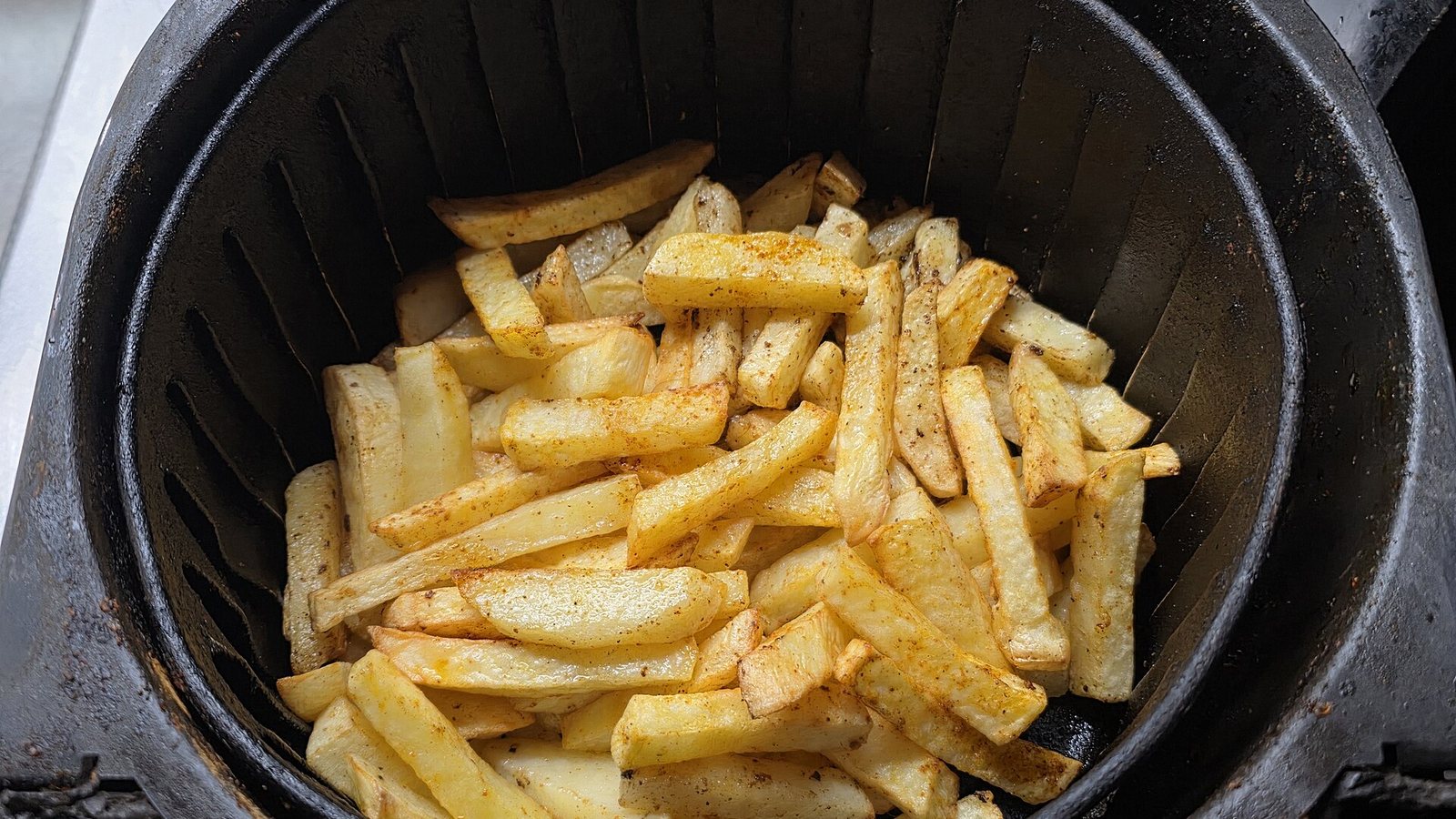
Our picks
Prices checked September 3, 2026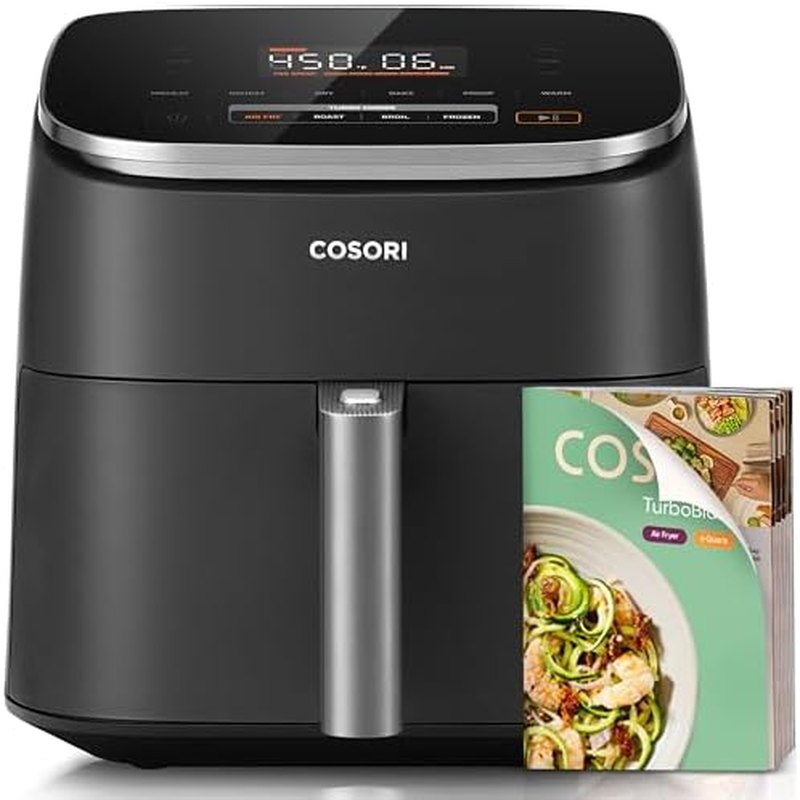
Cosori TurboBlaze 6-Quart
A genuinely square 6-qt basket that cooks for two to four in one batch, a 450°F top end for real crisping, and a ceramic (PFAS-free) coating. 4.8 stars across 21,000+ Amazon reviews.
6 qt basket1725 W450°F maxDishwasher-safe basket
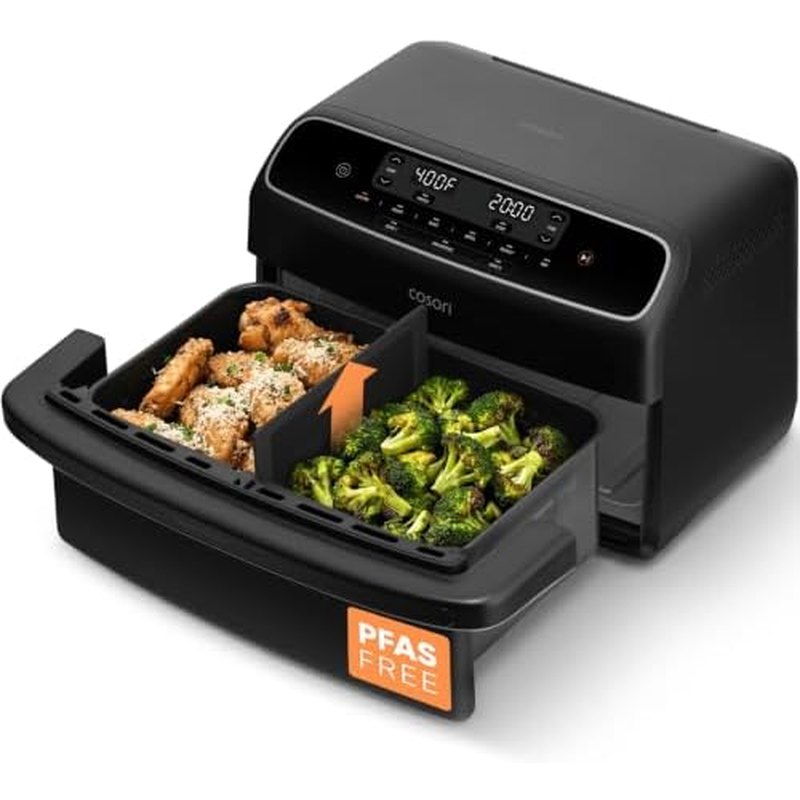
Cosori TwinFry 9-Quart Dual Basket
Two 4.5-qt zones with independent temperature and a sync-finish mode, and a removable divider that turns it into one wide 9-qt basket for a whole chicken.
9 qt (2 × 4.5)Sync finishRemovable divider1750 W
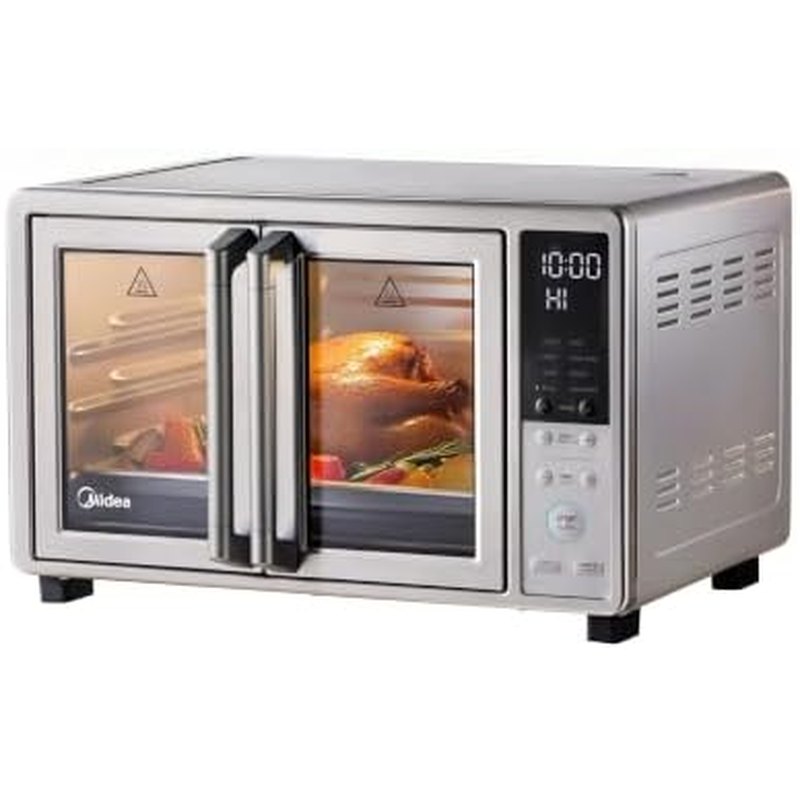
Midea Flexify Slim 25-Qt French Door
Three rack positions give far more flat cooking area than any basket, the French doors don't swing into your face, and it also toasts, bakes and dehydrates — one box instead of three.
25 qt3 racksFits a 12" pizza8 functions
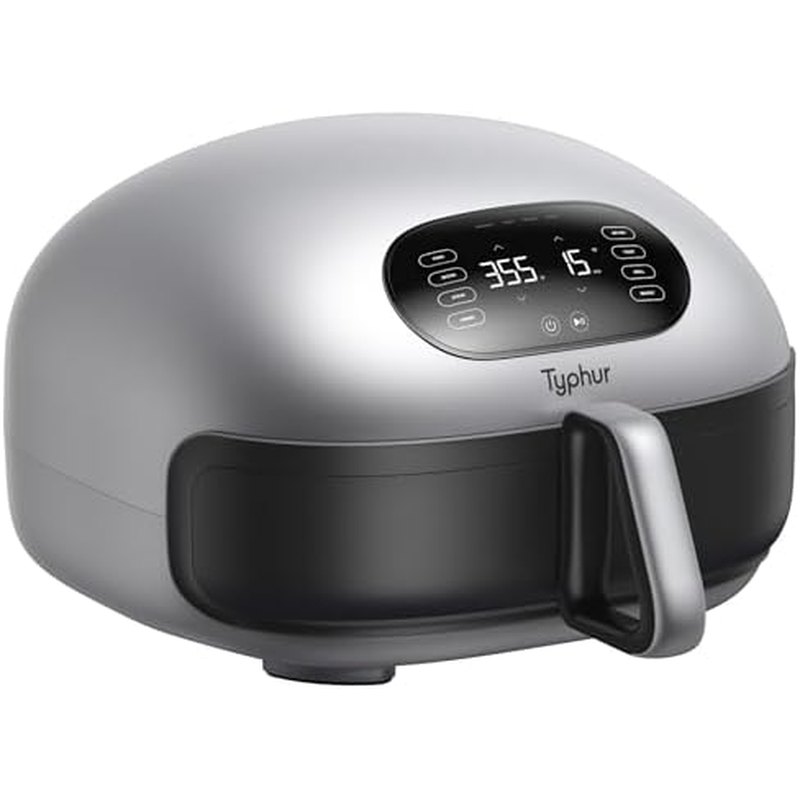
Typhur Dome 2
A wide, shallow dome with heating elements top and bottom, so a full 6-qt basket crisps evenly without shaking. Self-cleaning cycle. Overkill for most people, brilliant for the ones who cook in it daily.
6 qt (wide)Dual heatingSelf-clean15 presets
Air fryers are sized in quarts, and that one number causes more returns than any other spec on the box. A “5-quart” basket doesn’t hold five quarts of fries, and two models with the same rating can differ noticeably in how much food fits in a single layer. Owner reviews are full of people who bought the size that seemed right for a family of four and found themselves cooking dinner in two shifts.
The reason is that air fryers work by blowing hot air around food. Crisping needs space between the pieces, so what matters isn’t the volume of the basket but its usable floor area — how many chicken thighs or how many cups of fries you can spread flat without stacking. Capacity is a question of footprint, not litres.
We compared the basket dimensions of eighteen current models from Cosori, Ninja, Instant, Midea, Typhur, Dreo and Philips, read the long-term owner reviews for each, and cross-checked with Consumer Reports’ and Wirecutter’s test results. This guide translates the quart ratings into what you can actually cook, then names the models we’d buy for each household size.
Which size for which household
| Household | Basket size | What fits in one batch | Our pick |
|---|---|---|---|
| 1 person, small counter | 3–4 qt | 2 chicken thighs, one serving of fries, reheats | Ninja AF101 4-qt (about $90; not an affiliate link) |
| 2–3 people | 5–6 qt, square basket | 4 thighs, a pound of wings, a tray of vegetables | Cosori TurboBlaze 6-qt |
| 4–5 people | 8–10 qt dual basket | Main in one zone, side in the other, finishing together | Cosori TwinFry 9-qt |
| 5+ or batch cooks | 20–26 qt oven-style | A 12-inch pizza, two racks of vegetables, a small roast | Midea Flexify Slim 25-qt |
The single most useful trick when comparing models: ignore the quart number and look for the basket’s internal width and depth in the spec sheet or in reviewer photos. The Cosori TurboBlaze’s basket is roughly 9 by 9 inches; several “7-quart” round baskets from other brands have less flat floor than that because the corners are lost to the curve.
What the quart number does and doesn’t tell you
Manufacturers measure capacity by the basket’s total volume, and how they measure isn’t standardised. Some quote the outer drawer, some the inner basket, some round generously. The result is that a six-quart basket from one brand can have less cooking floor than a five-quart basket from another.
A better mental model is the single-layer rule. Most foods crisp properly only in one layer with some air between pieces. Stack fries three deep and the middle steams. So the question is how many fillets, thighs or cups of vegetables fit flat on the basket floor. Square baskets use their volume better than round ones because the corners add real area — it’s the main reason the Cosori sits at the top of our list rather than a same-size round competitor.
Depth matters less than you’d think for crisping, but it decides whether whole items fit. A tall basket takes a small whole chicken or a stack of skewers; a shallow, wide one can’t.
Matching size to your household and your cooking
For one or two people, a compact or mid-size basket is genuinely enough, and the mistake here is going too big out of caution. A large air fryer on a small counter takes up space you’ll resent, and an oversized basket used for a single serving preheats longer and can dry out small portions because the food sits alone in a big hot box. For a solo cook we’d still point to the 4-quart Ninja AF101 — it’s been on sale for years, it’s simple, and it takes up half the counter of anything else here. (We don’t earn anything on that one; it’s just the right answer.)
For three or four people the calculus shifts. Anything under about six quarts means cooking most mains in two rounds, and the first batch is cooling while the second finishes. The TurboBlaze’s square 6-qt basket handles a pound of wings or four thighs in one go. If you regularly cook a protein and a side at the same time, this is also where the Cosori TwinFry earns its extra $80: one zone runs chicken while the other does fries, and the sync feature finishes both together. Pull the divider out and it becomes one 9-qt basket wide enough for a whole chicken.
For five or more, or for anyone who batch-cooks, skip baskets and look at oven-style units. The Midea Flexify Slim gives you three rack positions — far more flat area than any basket — plus toast, bake and dehydrate, and the French doors open sideways so you’re not leaning over a hot hinged door. It’s slower to preheat and it doesn’t “shake”, but it’s the only category here that can put a full family dinner in at once.
Also think about what you cook. Frozen snacks and reheated leftovers are forgiving of size. Whole roasts, sheet-pan-style vegetables and dinners for guests are not. If you own a full-size oven and mostly want fast weeknight sides, size down. If you’re hoping to replace oven use in a hot climate, size up.
The costs of going bigger
Larger air fryers aren’t just bigger on the counter. They draw more power (the TwinFry and the Midea both pull 1,750 W, which is most of a kitchen circuit), they’re louder, and they take longer to preheat — the Typhur Dome 2 is the exception here because its dual heating elements bring it up to temperature in about a minute. Cleaning scales too: bigger baskets are harder to fit in the sink, and oven-style units have racks, a crumb tray and a door to wipe down.
Then there’s storage. Air fryers are tall, and the larger models often don’t fit under standard upper cabinets, which means the appliance either lives permanently on the counter or gets moved every time you use it. The TurboBlaze is about 14 inches tall; the Midea is over 12 inches but nearly 20 inches wide. Measure the height of your counter-to-cabinet gap and the depth of your counter before buying anything over six quarts. Reviewers who love their large air fryer almost always mention a dedicated spot for it; reviewers who regret theirs almost always mention the counter.
Why we skipped the microwave combos
Several brands (Toshiba, Black+Decker, Galanz) now sell microwave-air-fryer combination ovens. They look like the ultimate space saver. In owner reviews the air-fry mode is consistently the weak half — small capacity, uneven crisping, and long preheats — and the ratings sit around 4.0 to 4.2 stars against 4.7–4.8 for the standalone units above. Unless counter space is truly desperate, buy a separate air fryer.
FAQ
Is a dual-basket air fryer worth it over one large basket?
For households that cook a main and a side at the same time, yes. Each zone is smaller than a single large basket, though, so a dual model is not ideal for one big item like a whole chicken — unless it has a removable divider like the TwinFry. If you mostly cook one thing at a time, a large single basket is simpler and easier to clean.
Does a bigger air fryer cook slower?
Slightly. Larger cavities take longer to preheat and to recover heat when you open the drawer. The difference is a few minutes per session, which matters more if you use it several times a day than if you use it for dinner only.
Can I just cook in batches with a small one?
You can, and many people do. It works fine for snacks and appetisers. For a full dinner it means the first batch waits while the second cooks, and the total time can exceed what a conventional oven would take. If that’s your routine every night, it’s a sign to size up.
Do I need a 450°F model?
Not for fries and nuggets — 400°F does those. The extra 50°F matters for skin-on chicken, steak and anything you want a real sear on. The TurboBlaze and Typhur both hit 450°F; most budget models stop at 400°F.
The bottom line
For two to four people, buy a square 6-quart basket and stop overthinking it — the Cosori TurboBlaze is the one we'd get. Families of four or more should go dual-basket (Cosori TwinFry) or oven-style (Midea Flexify Slim). Solo cooks: a 4-qt basket like the Ninja AF101 is plenty and takes half the counter.
What we like
- Basket floor area, not the quart number, decides how much you can cook in one go — a square 6-qt basket beats a round 7-qt one
- Dual-basket models genuinely solve the 'protein and side at the same time' problem for families
- Oven-style units give the most cooking area per inch of counter and replace a toaster oven
What to watch
- Anything over about 6 qt is tall enough to fight with under-cabinet clearance — measure first
- Bigger units preheat slower and are louder; a compact model is the better buy for one person
- Quart ratings aren't standardised, so compare the basket's internal dimensions, not the headline number
Junjie Li
Junjie researches and writes every guide on this site. No lab and no sponsors: manufacturer specs, long-term owner reviews and professional test results, then a straight answer on what to buy for each situation.