Pitcher or Under-Sink Filter: The Three We'd Buy and the One Number to Check First
A $17 pitcher fixes chlorine taste; a $44 under-sink filter does it on tap for a year; only the $63 one is certified for lead. Read your water report, then pick from these three.

Our picks
Prices checked September 4, 2026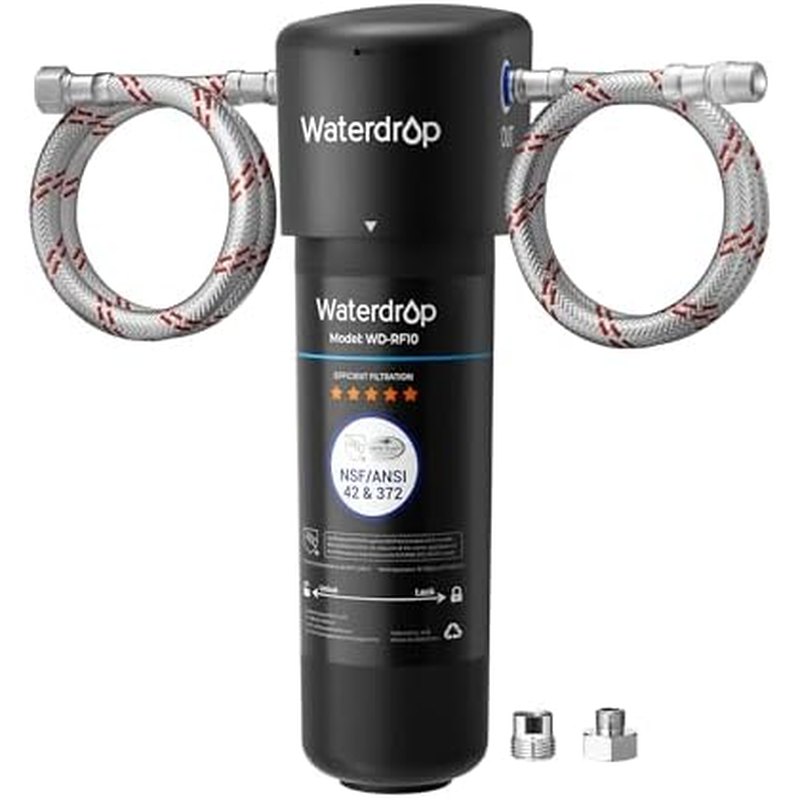
Waterdrop 10UA Under-Sink Filter
Connects to your existing cold-water line in about the time it takes to empty the cabinet, no separate faucet, no drilling, and one cartridge lasts a year, so filtered water comes out of the tap you already use.
NSF/ANSI 42 certified1-year filter lifeDirect connect to existing faucetNo drilling
Frizzlife Under-Sink Filter, NSF 53 & 42
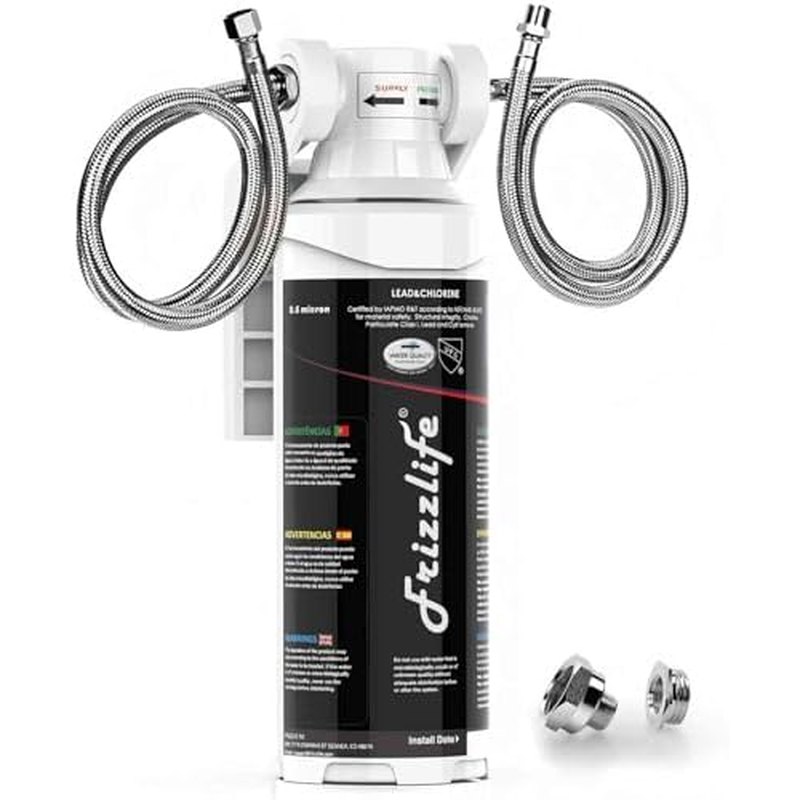
The only pick here certified to NSF/ANSI 53 for lead reduction, with a 0.5-micron carbon block; same direct-connect install as the Waterdrop, about twenty dollars more.
NSF/ANSI 53 & 42 certified0.5 micron carbon blockReduces lead and chlorineDirect connect install
Waterdrop PT-07B 10-Cup Pitcher
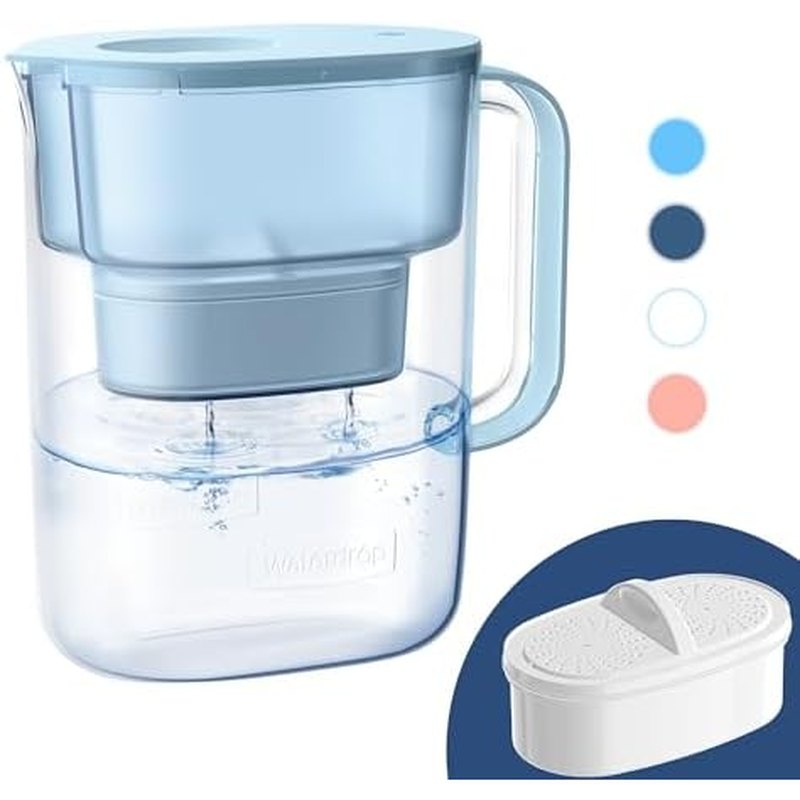
The cheapest way to stop tasting chlorine: a 10-cup NSF-certified pitcher that lives in the fridge, 16,000+ reviews at 4.6 stars, and it moves house with you.
10-cup capacityNSF certifiedGravity carbon filter
The decision is simpler than the category makes it look. If your complaint is chlorine taste, a $17 pitcher fixes it and a $44 under-sink filter fixes it without the waiting and the refilling. If your water report shows lead, or your building predates 1986 and you haven’t checked, only a filter certified to NSF/ANSI 53 counts, and of the three we’d buy that’s the Frizzlife at about $63. The under-sink models here connect to your existing cold-water line with no drilling and no separate faucet, which removes the main reason people used to stick with pitchers.
For most kitchens we’d buy the Waterdrop 10UA: one cartridge, a year of filtered water from the tap you already use, and a price that undercuts a year of pitcher filters. Renters who can’t touch the plumbing, and small households that drink a few glasses a day, are the pitcher’s remaining case; the Waterdrop 10-cup is the one we’d get, and it’s cheaper than the Brita it competes with. We didn’t lab-test any of these. This is a comparison of certification listings, rated filter life and long-term owner reviews, and where we mention Brita we earn nothing.
The three picks and the Brita they compete with
| System | Type | Certified to | Rated filter life | Price | Best for |
|---|---|---|---|---|---|
| Waterdrop 10UA | Under-sink, direct connect | NSF/ANSI 42 | 12 months | $44–$56 | Most kitchens: taste and chlorine, on tap |
| Frizzlife Under-Sink (NSF 53 & 42) | Under-sink, direct connect, 0.5 micron | NSF/ANSI 53 & 42 | High-capacity cartridge | $63–$70 | Lead reduction |
| Waterdrop PT-07B 10-Cup Pitcher | Gravity pitcher | NSF certified | Typically a couple of months per cartridge | $17–$20 | Renters, small households |
| Brita Standard pitcher (not an affiliate link) | Gravity pitcher | NSF/ANSI 42 (Standard filter); Elite filter adds 53 for lead | Standard about 2 months; Elite about 6 months | About $25–$35 | The familiar option |
Read your water report first
Municipal utilities publish an annual Consumer Confidence Report; search your city’s name plus that phrase. It lists what was detected and at what level, and it decides the category you shop in.
- Chlorine taste and odor only: NSF/ANSI 42. Every filter on this page qualifies.
- Lead, certain chemicals, cysts: NSF/ANSI 53. The Frizzlife and Brita’s Elite filter. Not the Waterdrop 10UA, not the Waterdrop pitcher.
- High dissolved solids, nitrates, arsenic and the like: NSF/ANSI 58, which means reverse osmosis. None of our picks; see below.
Private well: you’re your own utility. A lab test is worth far more than a strip kit, and it’s the one place we’d say don’t buy anything until you’ve done it.
A box that says “reduces contaminants” without naming the standard means nothing. The Waterdrop 10UA says 42; the Frizzlife says 53 and 42; that’s the whole reason one costs twenty dollars more.
Pitchers: cheap, slow, and fine for chlorine
A pitcher is the right answer in exactly two cases: you can’t touch the plumbing, or you drink little enough that a 10-cup tank lasts the day. The Waterdrop 10-cup at about $17 is the one we’d buy. It’s NSF certified for taste and odor, it has 16,000-plus reviews at 4.6 stars, and 9,000-plus people bought it in the past month, which says something about how it compares on price with the Brita Standard (about $25–$35, not an affiliate link) it sits next to.
The limitations are the same for every pitcher. Gravity filtering is slow, so a family empties it and then waits. Cartridges last a couple of months and cost real money over a year, often more than the under-sink cartridge below. A saturated cartridge stops working and, past its life, can start letting go of what it caught; a pitcher with a use-based indicator beats one that counts days. And no pitcher on the market touches hardness or dissolved solids. If your problem is scale on the kettle, a pitcher won’t fix it.
Brita’s one genuine advantage: its Elite filter (about $20 each, roughly six months, not an affiliate link) is certified under NSF/ANSI 53 for lead, which the Waterdrop pitcher’s standard cartridge isn’t. If you need lead reduction and can’t install anything, that’s the pitcher combination to buy.
Under-sink: why the $44 Waterdrop is the better buy for most
The Waterdrop 10UA changes the arithmetic. It’s a single cartridge that tees into the cold-water line under the sink and feeds your existing faucet. Install is a wrench, a bucket and ten to twenty minutes; owners who’ve never touched plumbing report doing it, and the recurring install complaint is about the adapter fitting a non-standard valve, not about leaks. There’s no separate faucet, no drilling, no tank. One cartridge is rated for a year. The whole thing runs 14,000-plus reviews at 4.6 stars.
What it does: NSF/ANSI 42, meaning chlorine, taste, odor, and a mechanical filter fine enough to catch sediment and rust. What it doesn’t: lead. It isn’t certified for it. That’s the honest line, and it’s why we list two under-sink filters rather than one.
Flow rate is the thing pitchers never had to worry about and under-sink buyers do. A direct-connect filter sits inline with your cold tap, so it also filters the water you fill pots with, and a clogged cartridge shows up as a slow faucet. Change it on schedule and the flow stays normal.
Lead: when only the Frizzlife will do
The Frizzlife is certified to NSF/ANSI 53 and 42, with a 0.5-micron carbon block, and it installs the same way, direct connect to the existing faucet. It’s about $63, roughly twenty dollars more than the Waterdrop, and that twenty dollars buys lead reduction plus a higher-capacity cartridge. If your report shows lead, your building has old solder or a lead service line, or you simply don’t know and can’t find out, this is the one to buy. Owners rate it 4.5 stars over 6,000-plus reviews.
Lead certification comes with a condition: the filter has to be changed on time. A 53-certified cartridge past its life is not certified for anything.
What about reverse osmosis?
We didn’t pick one, deliberately. RO removes dissolved solids and a broad range of contaminants that carbon can’t, and if your report shows nitrates, arsenic or very high TDS it’s the tool. The costs are a storage tank that eats half the cabinet, a drain connection, wastewater for every gallon made, and water that tastes flat unless the system remineralizes it. For chlorine and lead, the two problems most people actually have, the filters above do the job at a fraction of the price and complexity.
Running costs over a year
The pitcher is cheapest on day one and usually most expensive by month twelve: several cartridges, typically $10–$15 each, replaced late because nobody remembers. The 10UA is one cartridge a year. The Frizzlife’s cartridge costs more but lasts longer. Whatever you buy, set a calendar reminder for the change; the filter only works if it’s fresh.
FAQ
Is a pitcher good enough for lead?
Only one certified to NSF/ANSI 53 for lead. Brita’s Elite filter qualifies; the Waterdrop pitcher’s standard cartridge doesn’t. And only if you replace it on time. If lead is confirmed, the Frizzlife under-sink is the better answer.
Does the under-sink filter slow the faucet?
A little when the cartridge nears the end of its life; not noticeably when it’s fresh. A sudden slowdown means it’s time to change it.
Do I need a plumber?
Not for direct-connect models like these. If your shutoff valve is corroded or non-standard, that’s the one case where a plumber’s visit is cheaper than a flooded cabinet.
The bottom line
For most kitchens, the Waterdrop 10UA at about $44 is the one we'd install: on-tap filtered water for a year with a ten-minute install. If your water report shows lead or your plumbing is old, buy the Frizzlife (about $63) instead. Renters and one- or two-person households should get the Waterdrop 10-cup pitcher at about $17, or a Brita with the Elite filter (not an affiliate link) if they need lead reduction without touching the plumbing.
What we like
- The Waterdrop 10UA gives filtered water at the faucet you already use for a year on one cartridge, with no drilling and no separate tap
- The Frizzlife is certified to NSF/ANSI 53 for lead, the one certification that matters for old plumbing
- The Waterdrop 10-cup pitcher is about $17 and NSF certified, the cheap, portable answer for renters
What to watch
- The Waterdrop 10UA is certified to NSF/ANSI 42 only; it does not claim lead reduction
- Pitcher cartridges last a couple of months and usually cost more per year than one under-sink cartridge
- None of our picks handles hardness or dissolved solids; that's a reverse osmosis job
Junjie Li
Junjie researches and writes every guide on this site. No lab and no sponsors: manufacturer specs, long-term owner reviews and professional test results, then a straight answer on what to buy for each situation.